Introduction and Epidemiology
Ankle sprains are among the most common musculoskeletal injuries, accounting for 4%–7% of emergency department visits and representing about 30% of all sports injuries. Lateral ankle ligament injuries, particularly involving the anterior talofibular ligament (ATFL) and calcaneofibular ligament (CFL), are the most frequent, especially in sports requiring running, jumping, and pivoting such as soccer, basketball, volleyball, gymnastics, and martial arts. Chronic lateral ankle instability (CLAI) develops in approximately 20–40% of these injuries when conservative treatment fails.
The modified Broström procedure (MBP), including its variations (e.g., Broström-Gould), remains the gold standard surgical treatment for chronic lateral ankle instability. In cases with insufficient native ligament tissue or high-demand patients, anatomic ligament reconstruction using tendon grafts (autograft or allograft) is increasingly performed.
Importance of Rehabilitation and Return to Sport Timeline
Rehabilitation is critical to successful outcomes following lateral ankle ligament reconstruction. Early range of motion (ROM) exercises and progressive strengthening, especially of the ankle and peroneal tendons, contribute significantly to restoring function and stability. Most protocols advocate immobilization and non-weight bearing initially (approximately 2–4 weeks), followed by gradual weight-bearing and progressive training phases including personal training, team training, and full return to competitive play.
The timeline for return to sport varies among studies but generally falls within 3 to 6 months postoperatively:
- Return to personal training: Approximately 1.5 to 2 months after surgery.
- Return to team training: Around 2.5 to 3 months after surgery.
- Return to competitive play: Commonly reported between 3.5 and 6 months postoperatively.
A systematic review of tendon graft-based reconstructions reported an average return to sports (RTS) time of approximately 17 weeks (about 4 months). Another study in elite athletes found 83.3% returned to play by 4 months and 100% by 8 months post-MBP.
Rate of Return to Sport and Types of Activities
Return to sport rates are generally high following lateral ankle ligament reconstruction:
- Approximately 85–90% of patients return to some level of sport participation.
- Return to the preinjury level is slightly lower, ranging from 50% up to 90%, depending on the study and population.
- Professional and high-level athletes often return at slightly lower rates than recreational athletes, possibly due to higher performance demands.
Patients resume a wide variety of sports, including pivoting sports (soccer, basketball, martial arts, gymnastics) and non-pivoting activities (running, ballet, track and field). Return to pivoting sports may require longer rehabilitation and careful progression.
Rehabilitation Protocols and Physical Therapy
Rehabilitation consists of three phases:
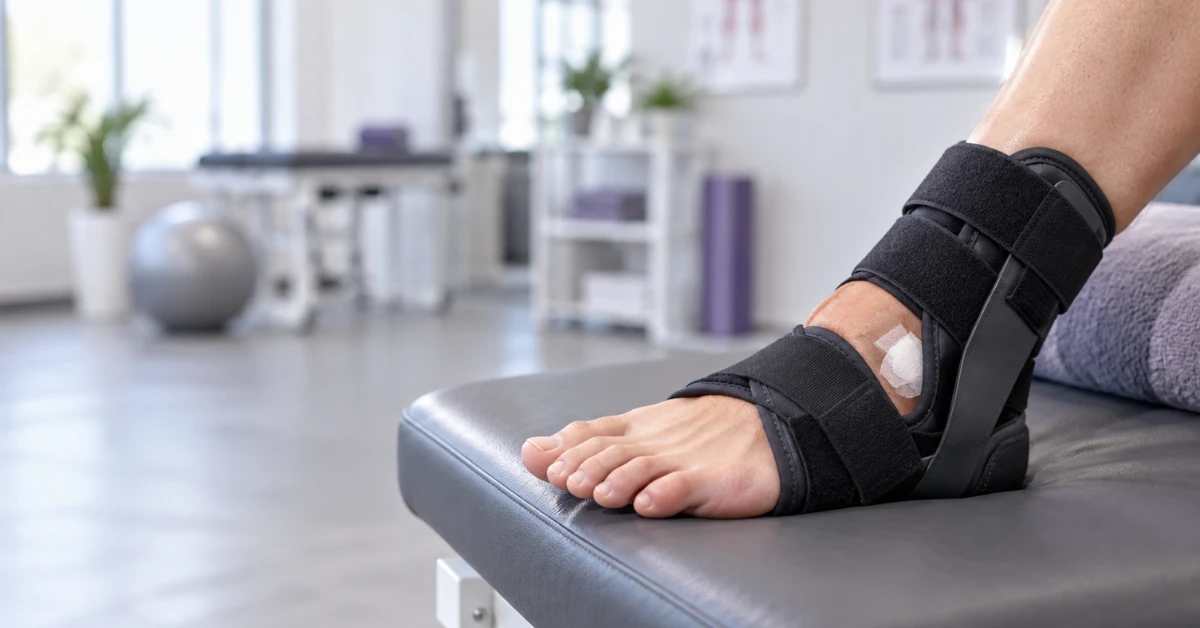
- Early Phase (Weeks 1–2): Non-weight bearing with use of immobilization devices (e.g., walking boot), passive ROM exercises, and pain control.
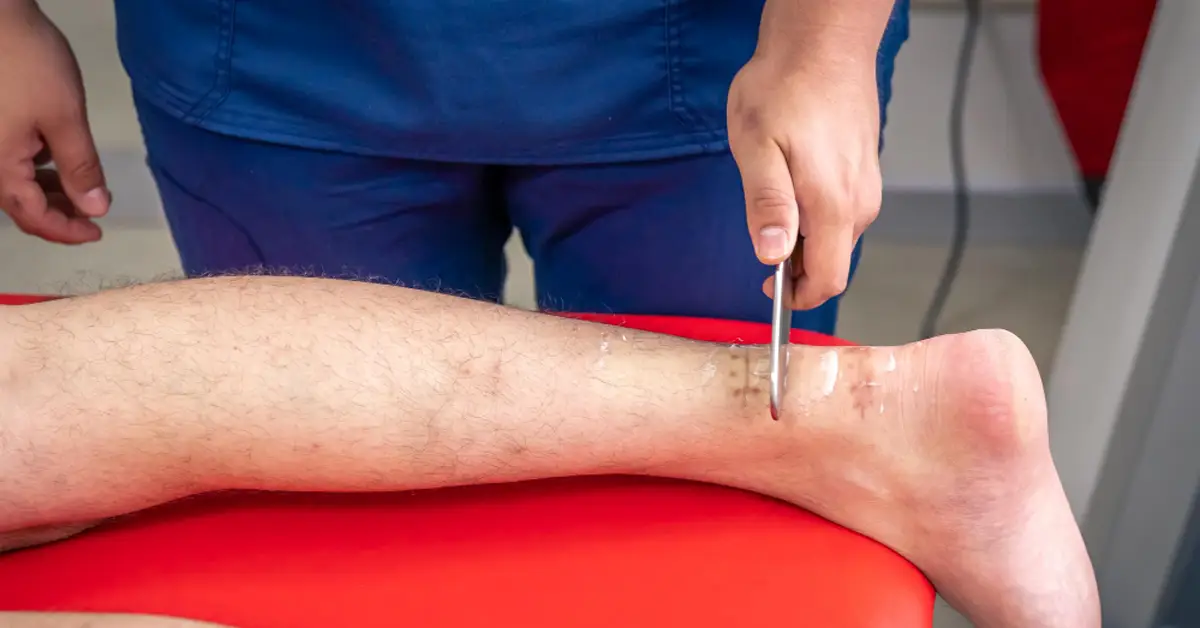
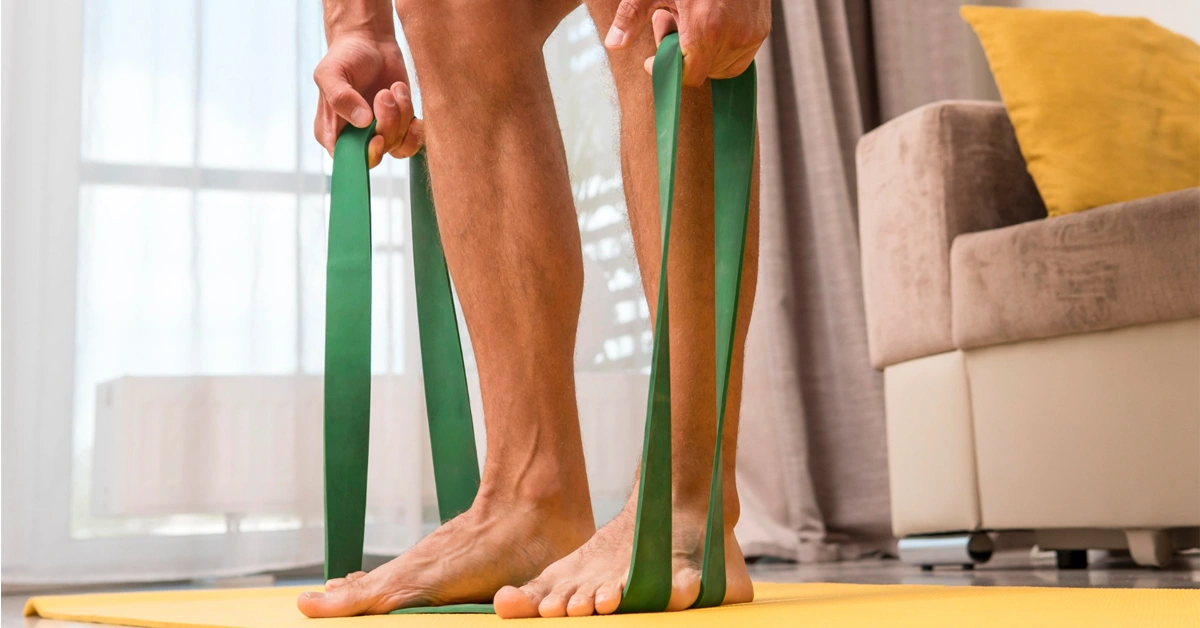
- Intermediate Phase (Weeks 3–7): Weight-bearing as tolerated, active ROM, strengthening exercises, proprioceptive training, and gradual return to personal training activities.
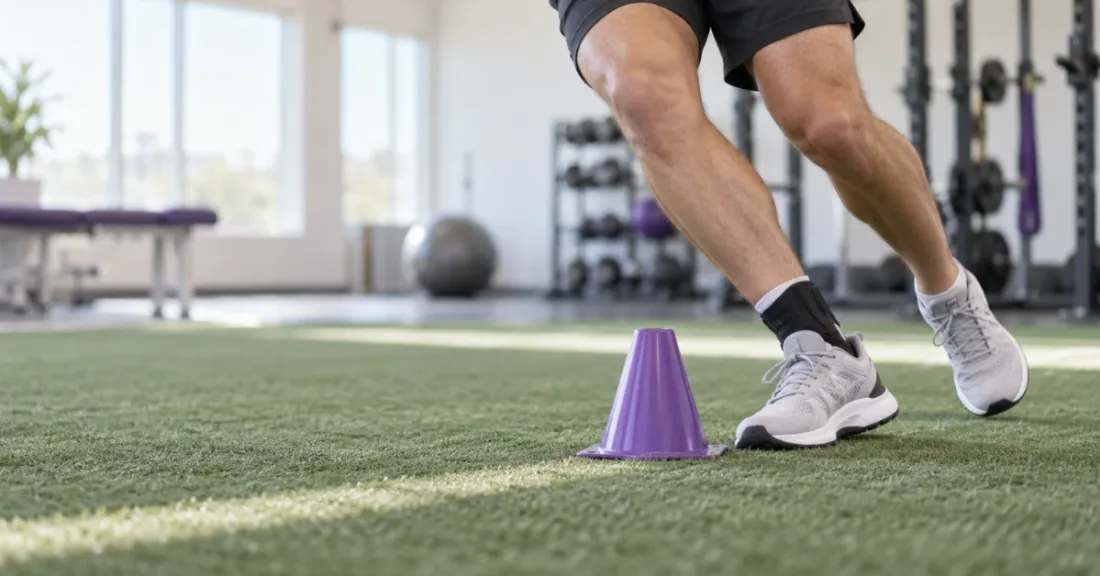
- Late Phase (Week 8+): Return to sport-specific training, dynamic exercises including cutting and lateral movements, and full participation in competitive sport.
Access to expert physical therapy and patient motivation are important for faster and more successful return to sport. However, formal physical therapy sessions may not always correlate directly with faster return to activity, as patient adherence and home-based rehabilitation also play important roles.
Psychological Readiness and Return to Sport
Psychological factors are increasingly recognized as critical in determining successful return to sport. The Ankle Ligament Reconstruction-Return to Sport after Injury (ALR-RSI) scale assesses psychological readiness and has shown strong correlation with functional outcomes and return to sport success. Patients with higher ALR-RSI scores are more likely to return to sport and to their preinjury levels. Psychological readiness should be evaluated alongside physical recovery to optimize outcomes.
Factors Influencing Return to Sport
Several factors may impact the timing and success of return to sport:
- Age and Level of Sport: Younger patients and those with higher preinjury activity levels tend to return more successfully.
- Body Mass Index (BMI): Higher BMI may be associated with delayed return but findings are variable.
- Generalized Ligamentous Laxity: Patients with generalized hyperlaxity may experience delayed return or reinjury risk, although MBP can still be successful.
- Concomitant Injuries: Presence of osteochondral lesions or soft tissue impingement may delay return.
- Surgical Technique: Reconstruction involving both ATFL and CFL may have slightly longer weight-bearing restrictions and rehabilitation compared to isolated ATFL repair.
- Workers’ Compensation Status: Associated with longer rehabilitation times and delayed return to activity.
- Gender: Some studies suggest males may return slightly earlier than females, but results are inconclusive.
- Psychological Factors: Fear of reinjury, lack of confidence, and motivation significantly influence return to sport.
Surgical Techniques and Graft Choice
Anatomic reconstruction with tendon grafts (gracilis, semitendinosus, peroneus brevis, or allografts) is effective for restoring stability in chronic lateral ankle instability, particularly in high-demand or revision cases. Open reconstruction techniques may have slight advantages in return to sport rates compared to arthroscopic approaches, but more studies are needed.
No significant difference in clinical outcomes or return to sport between gracilis tendon and split peroneus brevis autografts was observed; however, patients with peroneus brevis grafts may reduce their weekly exercise hours postoperatively, possibly due to biomechanical implications.
Complications and Revisions
Overall complication rates are low. Reported complications include wound issues, nerve irritation, stiffness, and rare re-ruptures. Revision surgery rates are low but may be influenced by traumatic reinjury postoperatively. Donor site morbidity is minimal with tendon grafts.
Summary and Clinical Implications
- Expected Timeline: Return to personal training occurs around 1.5–2 months, team training around 3 months, and full return to competitive play between 3.5 and 6 months postoperatively.
- Return to Sport Rates: Approximately 85–90% return to some sport; 50–90% return to preinjury levels.
- Rehabilitation: Structured and progressive rehabilitation focusing on ankle ROM, proprioception, strengthening, and sport-specific training is essential for successful return.
- Psychological Readiness: Incorporation of psychological evaluation tools like ALR-RSI scale can help identify patients at risk for delayed or unsuccessful return.
- Patient Considerations: Age, BMI, ligamentous laxity, concomitant injuries, and psychological factors should be considered in counseling and rehabilitation planning.
- Surgical Considerations: Choice of graft and technique should be individualized. Open anatomic reconstruction remains a gold standard, with tendon grafts reserved for high-demand or revision cases.
- Work and Daily Activity: Return to work is generally faster than return to sport, averaging 3–4 months.
- Future Directions: More high-level, sport-specific studies are needed to refine return-to-play criteria and optimize rehabilitation protocols.
Reference:
- Lee, K., Jegal, H., Chung, H., & Park, Y. (2019). Return to play after modified Broström operation for chronic ankle instability in elite athletes. Clinics in Orthopedic Surgery, 11(1), 126-130. https://doi.org/10.4055/cios.2019.11.1.126
- Goru, P., Talha, S., & Majeed, H. (2022). Outcomes and return to sports following the ankle lateral ligament reconstruction in professional athletes: A systematic review of the literature. Indian Journal of Orthopaedics, 56(2), 208–215. https://doi.org/10.1007/s43465-021-00532-0
- May, N. R., Driscoll, M., Nguyen, S., & Ferkel, R. D. (2022). Analysis of return to play after modified Broström lateral ankle ligament reconstruction. Orthopaedic Journal of Sports Medicine, 10(2), 23259671211068541. https://doi.org/10.1177/23259671211068541
- Raja, B. S., Gowda, A. K. S., Bhagat, S. K., Thomas, W., & Meena, P. K. (2023). Return to sports after ankle reconstruction with tendon grafts in chronic lateral ankle instability: A systematic review and meta-analysis. Journal of Clinical Orthopaedics and Trauma, 43, 102227. https://doi.org/10.1016/j.jcot.2023.102227
- Rupp, M.-C., Degenhardt, H., Winkler, P. W., Hinz, M., Ehmann, Y. J., Imhoff, A. B., et al. (2022). High return to sports and return to work rates after anatomic lateral ankle ligament reconstruction with tendon autograft for isolated chronic lateral ankle instability. Knee Surgery, Sports Traumatology, Arthroscopy, 30(11), 3862–3870. https://doi.org/10.1007/s00167-022-06937-0
- Sakkab, R., Corley, K., Chiu, M., Daschbach, M., & Miller, K. M. (2021). Return to activity following modified Broström procedure with and without a semimembranosus allograft. Foot & Ankle Surgery: Techniques, Reports & Cases, 1, 100106. https://doi.org/10.1016/j.fastrc.2021.100106
- Wang, Y., Hinz, M., Buchalter, W. H., Drumm, A. H., Eren, E., Haytmanek, C. T., & Backus, J. D. (2024). Ankle ligament reconstruction-return to sport after injury scale and return to sports after ankle ligament reconstruction or repair—a systematic review. Journal of Experimental Orthopaedics, 11, e12077. https://doi.org/10.1002/jeo2.12077
- Calder, J. D., Sexton, S. A., & Pearce, C. J. (2010). Return to training and playing after posterior ankle arthroscopy for posterior impingement in elite professional soccer. American Journal of Sports Medicine, 38(1), 120–124.
- White, W. J., McCollum, G. A., & Calder, J. D. (2016). Return to sport following acute lateral ligament repair of the ankle in professional athletes. Knee Surgery, Sports Traumatology, Arthroscopy, 24(4), 1124–1129.
- Pearce, C. J., Tourne, Y., Zellers, J., Terrier, R., & Toschi, P. (2016). Rehabilitation after anatomical ankle ligament repair or reconstruction. Knee Surgery, Sports Traumatology, Arthroscopy, 24(4), 1130–1139.
- Huang, B., Kim, Y. T., Kim, J. U., Shin, J. H., Park, Y. W., & Kim, H. N. (2016). Modified Brostrom procedure for chronic ankle instability with generalized joint hypermobility. American Journal of Sports Medicine, 44(4), 1011–1016.