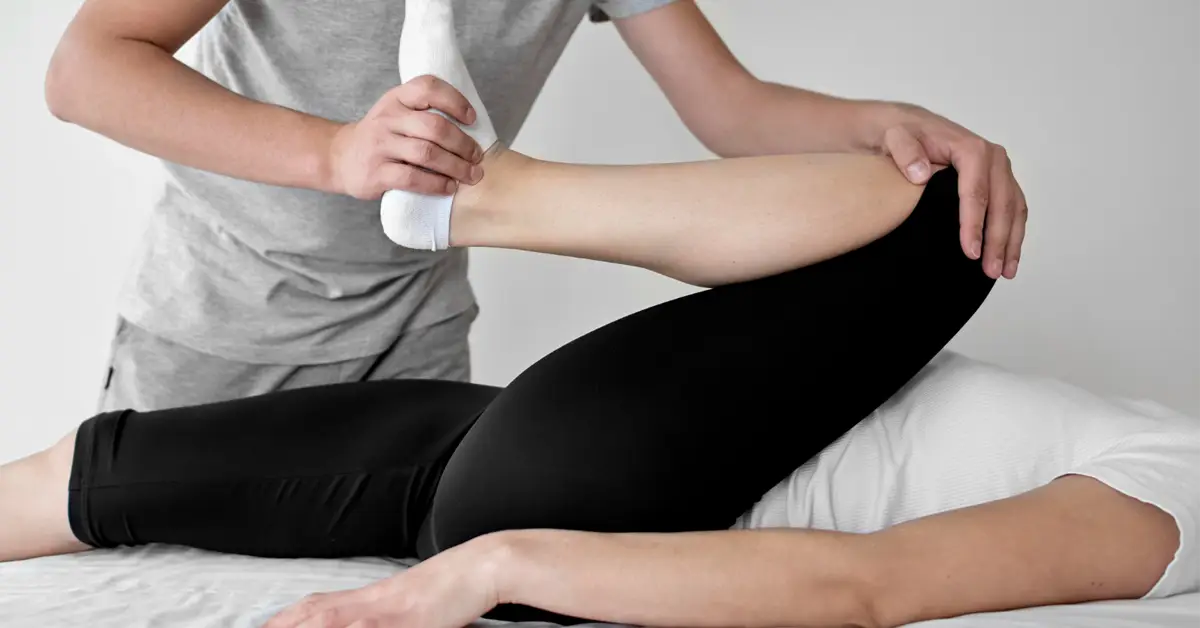
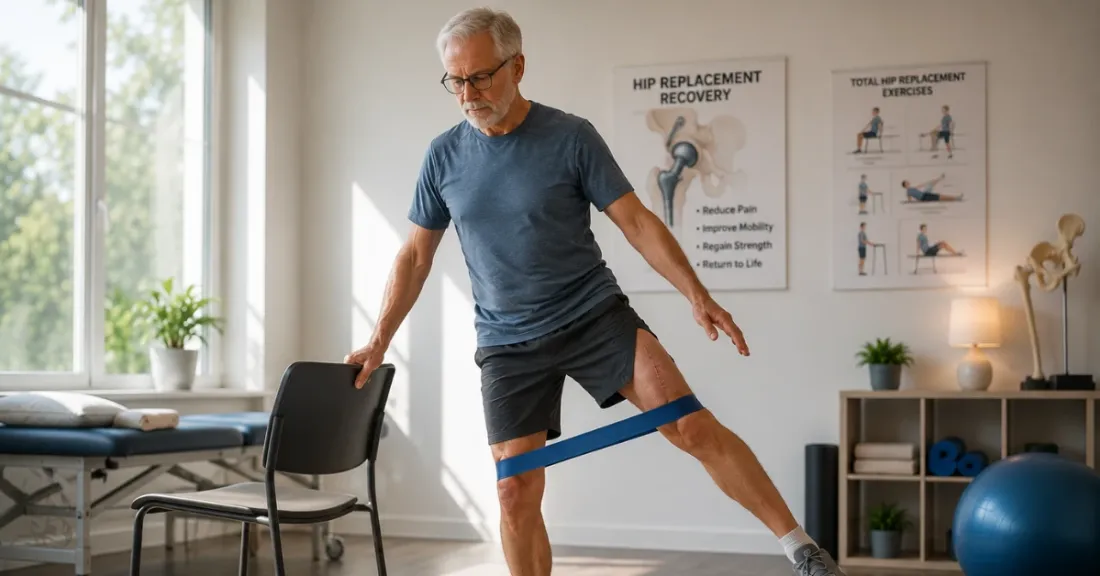
Introduction
Total Hip Arthroplasty (THA) is a common and effective surgical procedure primarily indicated for patients with advanced hip osteoarthritis and other debilitating hip joint conditions. This surgery involves replacing the damaged hip joint with a prosthesis, which can be cemented, non-cemented, or hybrid, depending on patient-specific factors such as age, activity level, and underlying pathology.
The prevalence of THA is growing globally, driven by aging populations and increased participation in physical activities that may accelerate joint degeneration. For instance, in China, approximately 400,000 THA procedures are performed annually, with numbers rising sharply due to demographic changes. Similar increases have been noted in Europe, the United States, and Australia.
While THA significantly reduces pain and improves function, achieving optimal outcomes depends heavily on effective rehabilitation post-surgery. Rehabilitation after THA is crucial for restoring joint function, improving muscle strength, reducing pain, and enhancing overall quality of life.
Importance of Rehabilitation After THA
Postoperative rehabilitation is essential for:
- Enhancing functional recovery and mobility.
- Reducing pain and preventing chronic pain syndromes.
- Optimizing muscle strength, particularly of hip abductors and extensors.
- Promoting early mobilization to reduce complications such as thromboembolism.
- Facilitating safe return to activities of daily living and sports.
- Improving patient self-efficacy and adherence to exercise programs.
Evidence suggests that early initiation of rehabilitation protocols, ideally beginning on the day of surgery or within the first postoperative day, leads to shorter hospital stays and better functional outcomes. Moreover, home-based rehabilitation programs with proper guidance have shown similar effectiveness to supervised outpatient therapy, offering cost-effective alternatives.
Rehabilitation Protocol Following THA Surgery
This protocol is divided into stages to guide functional recovery, muscle strengthening, and safe return to activities.
Stage 1: Immediate Postoperative Phase (Day 0 to Day 7)
Goal:
- Promote early mobilization and functional independence.
- Minimize pain and postoperative complications (e.g., thromboembolism).
- Protect the surgical site while initiating gentle movements.
Interventions:
- Begin physical therapy on the day of surgery or within 24 hours.
- Initiate weight-bearing as tolerated, often starting with partial weight-bearing using assistive devices such as crutches or walkers. Evidence supports the use of partial weight-bearing with crutches for approximately 2 weeks, although exact timing may vary.
- Early mobilization: sitting, standing, transfers, and walking short distances with assistive devices.
- Avoid routine use of postoperative bracing, as evidence shows no significant benefit.
Precautions:
- Avoid hip flexion beyond 90° and maintain hip precautions as advised by the surgical team, especially avoiding adduction and internal rotation if posterior approach was used.
- Monitor for signs of deep vein thrombosis
Exercises examples:
- Ankle pumps to reduce swelling and improve circulation.
- Gentle range of motion (ROM) exercises within allowed limits (hip flexion < 90°, limited internal and external rotation).
- Isometric quadriceps, gluteal, and hamstring contractions.
- Heel slides and hip abduction in supine within pain-free range.
- Stationary cycling without resistance may be initiated toward the end of this phase.
Stage 2: Early Recovery Phase (Week 2 to Week 6)
Goal:
- Increase hip ROM safely.
- Enhance muscle strength, especially hip abductors and extensors.
- Progress weight-bearing toward full as tolerated.
- Improve gait and balance.
Interventions:
- Gradually increase weight-bearing from partial to full over 4 to 6 weeks.
- Introduce progressive strengthening exercises focusing on hip musculature.
- Incorporate hydrotherapy or pool therapy from week 3 as tolerated.
- Emphasize patient education on safe movement and positioning.
- Use of assistive devices (crutches/walker) continues, with a typical duration of about 2 weeks, but may extend based on individual recovery.
Precautions:
- Avoid excessive hip flexion, adduction, and internal rotation until cleared.
- Monitor for pain exacerbation; avoid overloading the joint during strengthening.
- Be cautious with high-impact activities.
Exercises:
- Stationary bike with increasing resistance.
- Hip abduction/adduction strengthening (e.g., side-lying leg lifts).
- Gluteal strengthening (bridges, clamshells).
- Step-ups and step-downs beginning around week 4.
- Gentle squats and leg presses as tolerated.
- Balance and proprioceptive training.
Stage 3: Functional Recovery Phase (Week 6 to Week 12)
Goal:
- Restore full ROM and muscle strength.
- Improve endurance and functional capacity.
- Prepare for return to daily activities and low-impact sports.
Interventions:
- Discontinue assistive devices as gait improves.
- Progress strengthening to higher resistance and functional exercises.
- Continue aerobic conditioning (stationary cycling, swimming).
- Begin more dynamic balance and proprioceptive exercises.
Precautions:
- Avoid high-impact activities that may jeopardize prosthesis stability.
- Monitor for signs of overuse or pain flare-ups.
Exercises examples:
- Progressive resistance training for hip abductors, extensors, and quadriceps.
- Functional exercises: lunges, step-ups with increased height, and squats.
- Pool therapy and water walking for low-impact conditioning.
- Neuromuscular electrical stimulation (NMES) may be considered to enhance muscle strength recovery.
Stage 4: Advanced Functional Phase (3 to 6 Months Postoperative)
Goal:
- Achieve near-normal strength and function.
- Return to recreational activities and sports at a safe level.
Interventions:
- Tailored exercise programs focusing on strength, endurance, and neuromuscular control.
- Continue home exercise programs emphasizing adherence and self-efficacy.
- Gradual return to low- to moderate-impact sports as tolerated.
Precautions:
- Continued avoidance of high-impact activities until cleared by surgeon and therapist.
- Monitor for any signs of prosthetic complications or pain.
Exercises examples:
- Higher intensity resistance training focusing on the hip and lower extremity muscles.
- Agility and functional training specific to patient goals.
- Continued aerobic conditioning.
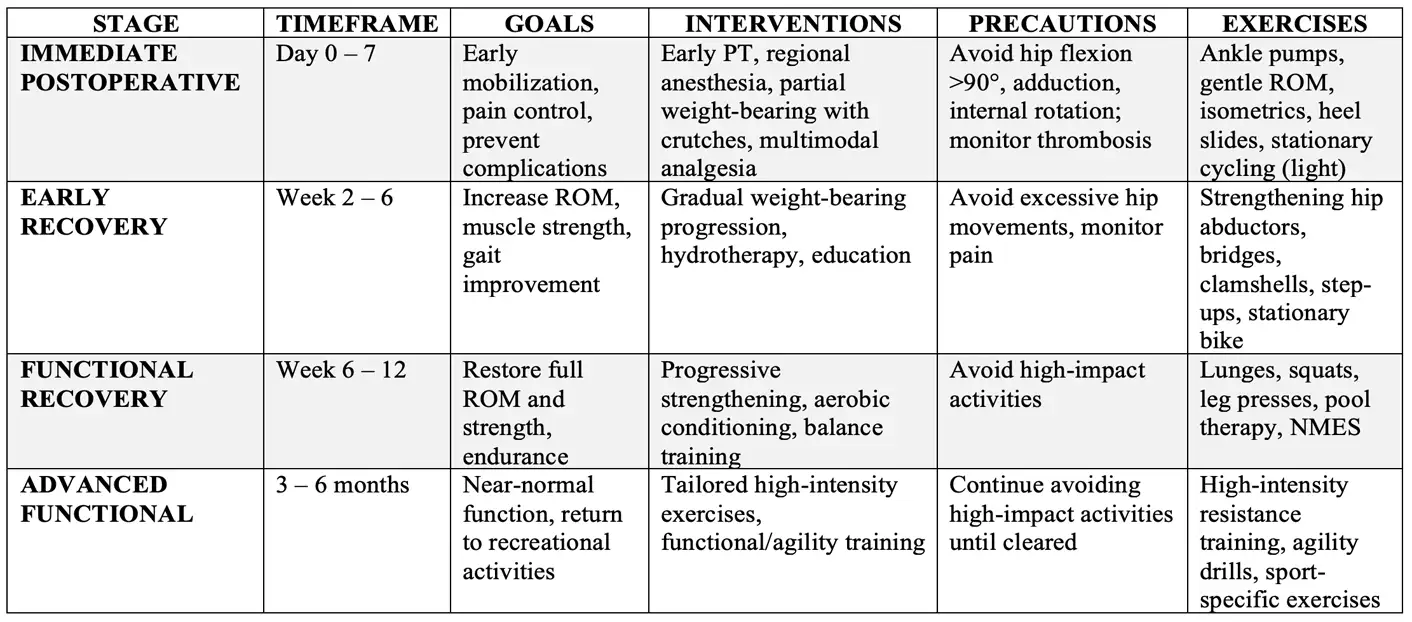
Summary Table of THA Rehabilitation Protocol
New Findings and Important Points
- Weight-bearing: Recent literature supports early partial weight-bearing with crutches, typically for about 2 weeks post-THA, with progression to full weight-bearing as tolerated. Early weight-bearing does not negatively impact outcomes and may facilitate faster recovery.
- Bracing: The routine use of postoperative bracing is not supported by current evidence and does not improve outcomes.
- Home-based Rehabilitation: Programs delivered at home with proper patient education and self-efficacy support can be as effective as supervised outpatient therapy.
- Functional Recovery: Despite good surgical outcomes, full recovery of hip muscle strength, especially in external rotation, may take longer and requires focused strengthening.
- Self-efficacy: Enhancing patient confidence and adherence through targeted interventions improves rehabilitation outcomes.
Which Sports Are Safe After a Hip Replacement?
Getting back to sport is an important goal for many people after a total hip replacement. The good news is that a hip replacement does not mean giving up an active lifestyle. Most people can return to some form of sport or exercise, although the type of activity and the timing of the return are important.
A useful way to think about sports after a hip replacement is to divide them into three groups: sports that are generally safe to return to, sports that require more caution, and sports that are generally not recommended.
Sports that are generally safe
Low-impact activities are usually the best place to start. These include walking, swimming, cycling, golf, bowling, rowing, water aerobics, ballroom dancing, and low-impact exercise classes. These activities put less stress and sudden force through the artificial hip and can be excellent ways to rebuild fitness after surgery.
Walking is particularly useful because it can usually be increased gradually according to how the person feels, rather than following a strict timetable. As strength and confidence improve, other low-impact activities can be added.
Sports that require more caution
Some activities place greater demands on the hip but may still be possible, particularly if the person already had experience with that sport before surgery. Examples include hiking, skiing, dancing, fencing, horseback riding, rock climbing, Pilates, weight lifting, and doubles tennis.
This is where a gradual return is especially important. Someone who has been skiing or playing tennis for many years may have the strength, balance, coordination, and technique needed to return more safely than someone trying the activity for the first time after surgery. In fact, previous experience in a particular sport was the strongest factor associated with successfully returning to that sport.
For these activities, physiotherapy can help prepare the person by improving strength, balance, flexibility, coordination, and sport-specific movement before returning to full participation. Rather than simply saying that someone is “cleared” to play, the goal is to make sure the hip and the rest of the body are ready for the demands of the activity.
Sports that are generally not recommended
High-impact and contact sports are the most concerning after a hip replacement. These include running or jogging, singles tennis, football, basketball, soccer, volleyball, martial arts, squash or racquetball, and high-impact aerobics.
The concern is that these activities can involve repeated high loads, jumping, sudden changes of direction, or direct blows to the hip. These forces may increase the risk of problems such as dislocation, fracture, implant wear, or loosening of the artificial hip. Aseptic loosening—the implant becoming loose without an infection—was the main long-term complication highlighted in the review.
This does not necessarily mean that every person with a hip replacement will be unable to participate in these activities. Some experienced athletes have returned to higher-impact sports. However, the long-term evidence is still limited, so these activities should be approached with caution and discussed with the surgical and rehabilitation team.
When can you return?
There is no single date at which everyone is ready to return to sport. Low-impact activities can often be increased as tolerated, while more demanding activities should be introduced gradually. The review suggests that moderate- and high-impact activities requiring substantial strength and coordination should generally be progressed around 7 months after surgery, with a return to previous sporting levels ideally not before 12 months.
The key message is that having a hip replacement does not mean you have to stop being active. In most cases, the safest approach is to start with lower-impact activities, gradually build strength and confidence, and then progress toward more demanding sports when appropriate. Your previous experience, physical condition, the type of sport, and how well you have recovered should all be considered. When in doubt, a physiotherapist or surgeon can help determine whether you are ready for the specific demands of your sport.
Frequently Asked Questions
1. When can I start moving my hip after surgery?
Typically, you will begin gentle movement and physical therapy on the day of surgery or the day after, starting with assisted movements and walking with crutches.
2. How long will I need to use crutches?
Most patients use crutches for about 2 weeks during partial weight-bearing, gradually progressing to full weight-bearing as tolerated.
3. Will I have to wear a brace after surgery?
Routine use of braces is generally not necessary unless recommended by your surgeon.
4. How long does rehabilitation last?
Rehabilitation is a gradual process that can take up to 6 months or longer, depending on your progress and goals.
5. Can I do my rehabilitation exercises at home?
Yes, with proper guidance and support, home-based exercises can be effective and convenient.
6. How is pain managed during rehabilitation?
Pain is managed with a combination of medications, including local anesthesia during surgery and oral pain relievers postoperatively.
7. When can I return to sports or recreational activities?
Low-impact activities can typically be resumed around 3 to 6 months post-surgery, but high-impact sports require clearance from your healthcare provider.
References
- Costa, L. dos S. M., Lima, V. G. de, Barros, F. D. da S. F., Pereira, P. A., Lima, R. M. A., Silva, A. K. A. da, & Tatmatsu-Rocha, J. C. (2021). Hip arthroplasty: Effective rehabilitation protocols. Research, Society and Development, 10(4), e45510414370. https://doi.org/10.33448/rsd-v10i4.14370
- Tasso, F., Simili, V., Di Matteo, B., Monteleone, G., Martorelli, F., De Angelis, A., … & Scardino, M. (2022). A rapid recovery protocol for hip and knee replacement surgery: a report of the outcomes in a referral center. European Review for Medical and Pharmacological Sciences, 26, 3648–3655. https://doi.org/10.26355/eurrev_202206_29333
- Wainwright, T. W., Gill, M., McDonald, D. A., Middleton, R. G., Reed, M., Sahota, O., … & Ljungqvist, O. (2020). Consensus statement for perioperative care in total hip replacement and total knee replacement surgery: Enhanced Recovery After Surgery (ERAS®) Society recommendations. Acta Orthopaedica, 91(1), 3–19. https://doi.org/10.1080/17453674.2019.1683790
- Wainwright, T. W., & Kehlet, H. (2019). Fast-track hip and knee arthroplasty – have we reached the goal? Acta Orthopaedica, 90(1), 3–5. https://doi.org/10.1080/17453674.2018.1550708
- De Luca, M. L., Ciccarello, M., Martorana, M., Infantino, D., Mauro, G. L., Bonarelli, S., & Benedetti, M. G. (2018). Pain monitoring and management in a rehabilitation setting after total joint replacement. Medicine, 97(40), e12484. https://doi.org/10.1097/MD.0000000000012484
- Hallberg, S., Sansone, D. M., & Augustsson, J. (2020). Full recovery of hip muscle strength is not achieved at return to sports in patients with femoroacetabular impingement surgery. Knee Surgery, Sports Traumatology, Arthroscopy, 28(4), 1276–1282. https://doi.org/10.1007/s00167-018-5337-0
- Deng, B., Chen, Y., Meng, Y., Zhang, Y., Tan, X., Zhou, X., & Zhang, M. (2022). A self-efficacy-enhancing intervention for Chinese patients after total hip arthroplasty: Study protocol for a randomized controlled trial with 6-month follow-up. Journal of Orthopaedic Surgery and Research, 17, 1. https://doi.org/10.1186/s13018-021-02689-8
- Bandholm, T., Wainwright, T. W., & Kehlet, H. (2018). Rehabilitation strategies for optimisation of functional recovery after major joint replacement. Journal of Experimental Orthopaedics, 5(44). https://doi.org/10.1186/s40634-018-0156-2
- Kao, J.-C., Chuang, C.-A., Tang, H.-C., & Chan, Y.-S. (2024). The crutch usage and rehabilitation after hip arthroscopy surgery: A systematic review. Formosan Journal of Musculoskeletal Disorders, 15(2), 61–67. https://doi.org/10.4103/fjmd.FJMD-D-23-00006
- Van Zyl, J., Hargreaves, M., Rahaman, C. A., Dayal, D., Harrel, M. L., Evely, T. B., Brabston, E. W., Momaya, A. M., & Casp, A. J. (2025). Variability in physical therapy protocols after hip arthroscopy. Orthopaedic Journal of Sports Medicine, 13(10), 23259671251356269. https://doi.org/10.1177/23259671251356269
- Cvetanovich, G. L., Lizzio, V., Meta, F., Chan, D., Zaltz, I., & Nho, S. J. (2017). Variability and comprehensiveness of North American online available physical therapy protocols following hip arthroscopy for femoroacetabular impingement and labral repair. Arthroscopy, 33(11), 1998-2005.e1. https://doi.org/10.1016/j.arthro.2017.06.045
- Sowers, Christopher B., et al. “Return to sports after total hip arthroplasty: an umbrella review for consensus guidelines.” The American Journal of Sports Medicine 51.1 (2023): 271-278. https://doi.org/10.1177/03635465211045698