Introduction
Hallux valgus (HV), commonly known as a bunion, is a prevalent deformity of the foot characterized by lateral deviation of the great toe (hallux) and medial prominence of the first metatarsal head. It affects approximately 23% of adults aged 18 to 65 years and up to 35% of those over 65, with a higher incidence in females due to factors such as footwear choices and ligamentous laxity. The pathophysiology involves an imbalance of intrinsic and extrinsic foot muscles, ligamentous structures, and altered foot biomechanics leading to pain, gait disturbances, and reduced quality of life.
Surgical correction is often indicated for symptomatic patients, especially when conservative management fails. Over 150 surgical techniques exist, ranging from distal metatarsal osteotomies (e.g., Chevron, Scarf, Austin) to proximal procedures (e.g., Lapidus arthrodesis) and minimally invasive approaches. Surgery aims to realign the first ray, restore joint congruency, and relieve symptoms but is frequently associated with postoperative complications, including stiffness, recurrence, and altered gait biomechanics.
Emerging evidence emphasizes the role of postoperative rehabilitation in improving outcomes, restoring function, and preventing complications. Rehabilitation focuses on regaining joint range of motion (ROM), strength, gait normalization, pain management, and early return to activities.
Importance of Rehabilitation After Hallux Valgus Surgery
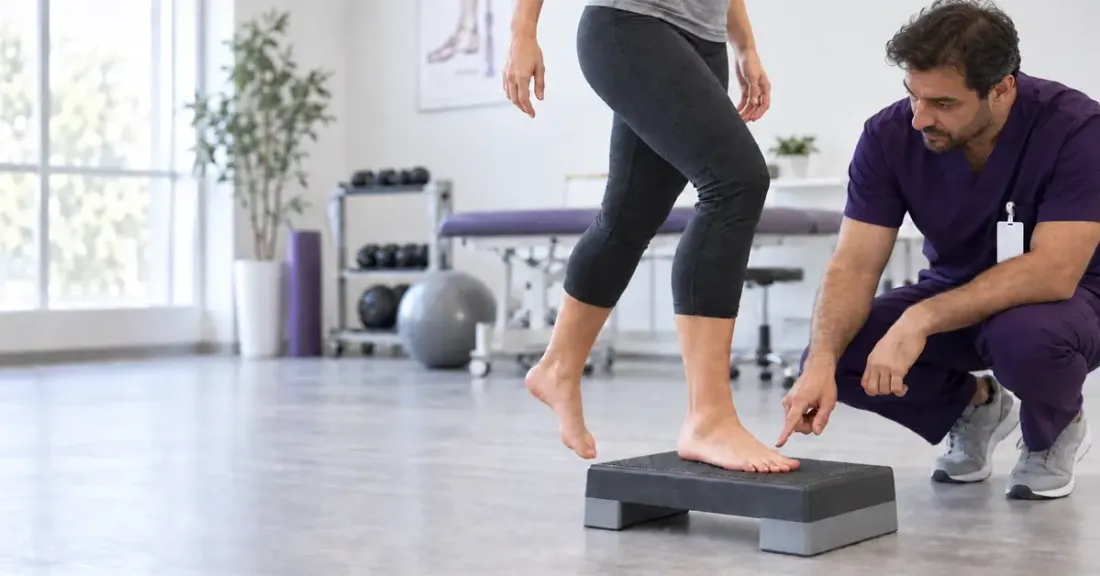
Postoperative rehabilitation is crucial to restore physiological gait patterns and weight-bearing function of the first ray, which is heavily loaded during walking and running. Studies reveal that despite surgical correction, the functional use of the hallux may remain impaired, resulting in altered plantar pressure distribution and compensatory loading of other metatarsals. Rehabilitation interventions, including physical therapy, mobilization, gait training, and use of appropriate footwear, have demonstrated benefits in improving joint function, pain, and patient satisfaction.
Recent systematic reviews highlight the lack of high-quality randomized controlled trials in this area but support the use of continuous passive motion, dynamic splinting, early weight-bearing protocols, and targeted physical therapy. Early mobilization has been shown to promote quicker return to function without increasing the risk of complications. Additionally, innovative approaches such as virtual reality-guided exercises may enhance gait and postural control postoperatively.
Rehabilitation Protocol Timeline
Stage 1: Preoperative Phase (Optional but Recommended)
Goal:
- Prepare the foot and lower limb musculature to optimize postoperative recovery.
- Educate patient on postoperative expectations and rehabilitation importance.
Interventions:
- Strengthening exercises for intrinsic foot muscles (e.g., abductor hallucis).
- Range of motion exercises for the first metatarsophalangeal (MTP) joint.
- Footwear education and orthotic assessment.
- Patient education regarding surgery and postoperative care.
Precautions:
- Avoid overloading the foot.
- Tailor exercises to patient tolerance.
Exercises Examples:
- Toe-spread-out exercises to activate abductor hallucis.
- Short foot exercises to enhance arch stability.
- Gentle passive and active ROM of the first MTP joint.
Additional Points:
- No randomized controlled trials currently substantiate prehabilitation efficacy in HV surgery, but extrapolation from larger joint surgeries suggests benefits.
Stage 2: Immediate Postoperative Phase (0-2 weeks)
Goal:
- Protect surgical site and minimize pain and swelling.
- Prevent complications such as stiffness and deep vein thrombosis (DVT).
- Begin gentle mobilization as tolerated.
Interventions:
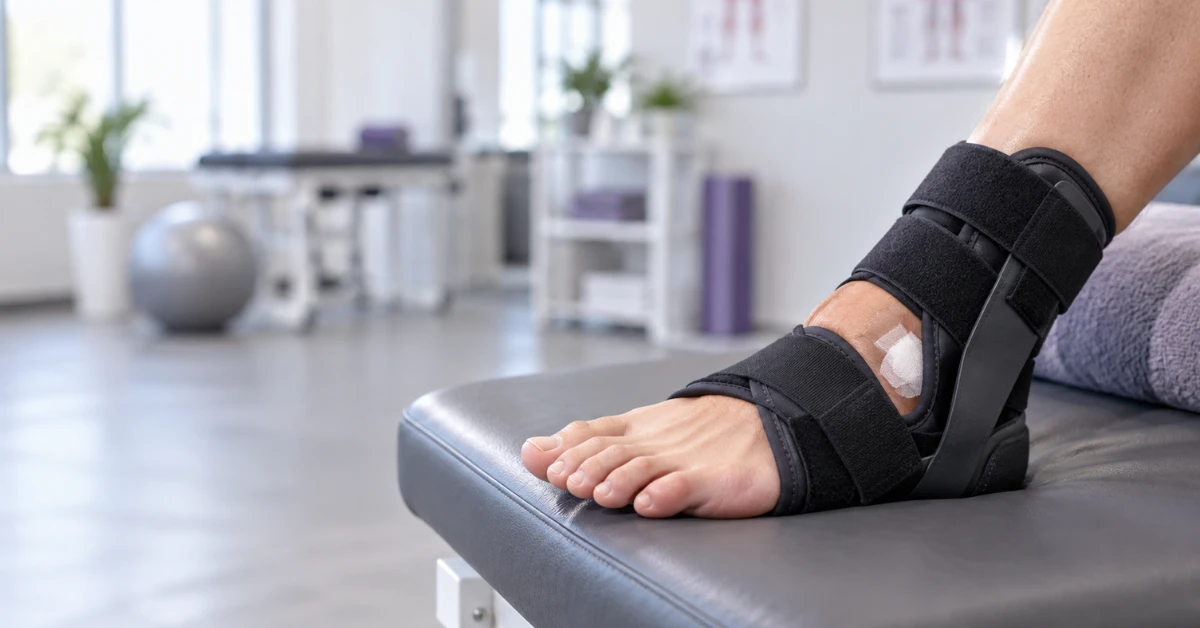
- Use of postoperative shoe with flat, stiff sole (e.g., Rathgeber shoe) or reverse camber shoe for forefoot off-loading.
- Cryotherapy and elevation to reduce swelling.
- Passive range of motion (PROM) exercises for the first MTP joint (2x daily).
- Lymphatic drainage and gentle soft tissue mobilization.
- Instruction on non-weight bearing or partial weight-bearing per surgical protocol.
Precautions:
- Avoid full weight-bearing unless cleared by surgeon.
- Monitor for signs of infection, wound complications.
Exercises Examples:
- Passive flexion and extension of first MTP joint.
- Ankle pumps and isometric contractions of leg muscles to maintain circulation.
- Gentle toe mobilizations avoiding stress on osteotomy site.
Additional Points:
- Early controlled mobilization and initiation of PROM may prevent adhesions and improve ROM.
- The reverse camber shoe reduces forefoot loading but may have compliance issues in older patients or those with arthritis.
Stage 3: Early Rehabilitation Phase (2-6 weeks)
Goal:
- Restore joint range of motion and initiate muscle strengthening.
- Begin gradual weight-bearing progression if permitted.
- Normalize gait patterns.
Interventions:
- Initiate active range of motion (AROM) exercises for first MTP joint.
- Begin strengthening exercises for intrinsic and extrinsic foot muscles.
- Gradual progression from partial to full weight-bearing as tolerated or per surgeon’s instructions.
- Gait training focusing on heel strike and push-off mechanics.
- Manual therapy including mobilizations of first MTP, Lisfranc, subtalar, and ankle joints.
Precautions:
- Avoid premature full weight-bearing if stability is not achieved.
- Monitor for pain, swelling, and signs of osteotomy instability.
Exercises Examples:
- Toe curls and marble pick-up exercises.
- Toe-spread-out and short foot exercises for muscle balance.
- Dynamic splinting or continuous passive motion devices may be used to enhance ROM.
- Heel walking progressing to full foot contact as tolerated.
Additional Points:
- Early weight-bearing at 2 weeks postoperatively is safe and may improve early functional outcomes without increased complications.
- Dynamic splinting improves dorsiflexion ROM when initiated early.
Stage 4: Functional Recovery Phase (6-12 weeks)
Goal:
- Achieve near-normal joint mobility and strength.
- Restore functional gait and balance.
- Minimize pain and improve patient satisfaction.
Interventions:
- Continuation and progression of strengthening and stretching exercises.
- Balance and proprioceptive training.
- Transition to normal footwear with orthoses as indicated.
- Continued gait training and functional activities.
Precautions:
- Avoid high-impact activities or those that stress the first ray excessively.
- Monitor for recurrence of deformity or pain.
Exercises Examples:
- Advanced toe and foot strengthening (resisted toe flexion/extension).
- Balance exercises (single-leg stance, wobble board).
- Progressive weight-bearing exercises (walking, stationary cycling).
- Functional gait drills.
Additional Points:
- Patient adherence to rehabilitation is critical; motivational interviewing and behavioral skill training improve compliance.
- Use of virtual reality-guided exercises may enhance postural control and gait mechanics.
Stage 5: Return to Activity Phase (3-6 months)
Goal:
- Return to preoperative levels of activity including sports or occupational demands.
- Maintain joint mobility and foot function.
- Prevent recurrence and complications.
Interventions:
- Individualized sport-specific or occupation-specific training.
- Maintenance exercises for foot and lower limb strength.
- Regular follow-up and monitoring.
Precautions:
- Avoid premature return to high-impact activities.
- Assess for signs of overload or recurrence.
Exercises Examples:
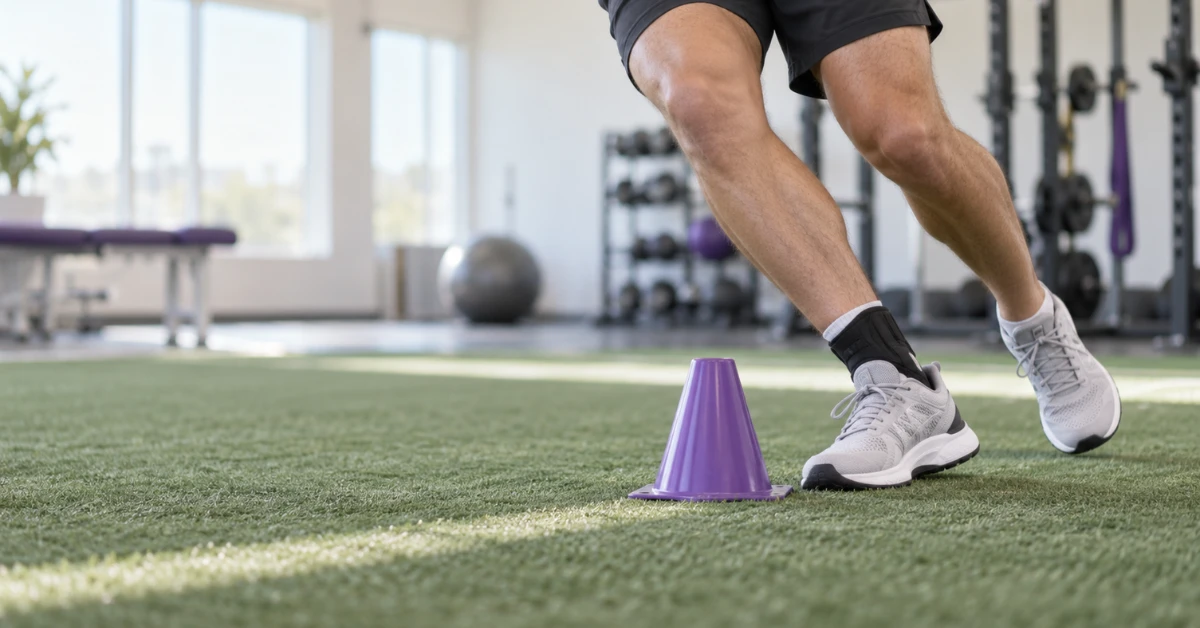
- Plyometric and agility drills as tolerated.
- Endurance training.
- Ongoing foot and ankle strengthening and flexibility exercises.
Additional Points:
- Return to sports may vary; minimally invasive techniques allow quicker return (approx. 8-12 weeks).
- Patient education on footwear and foot care is essential to maintain outcomes.
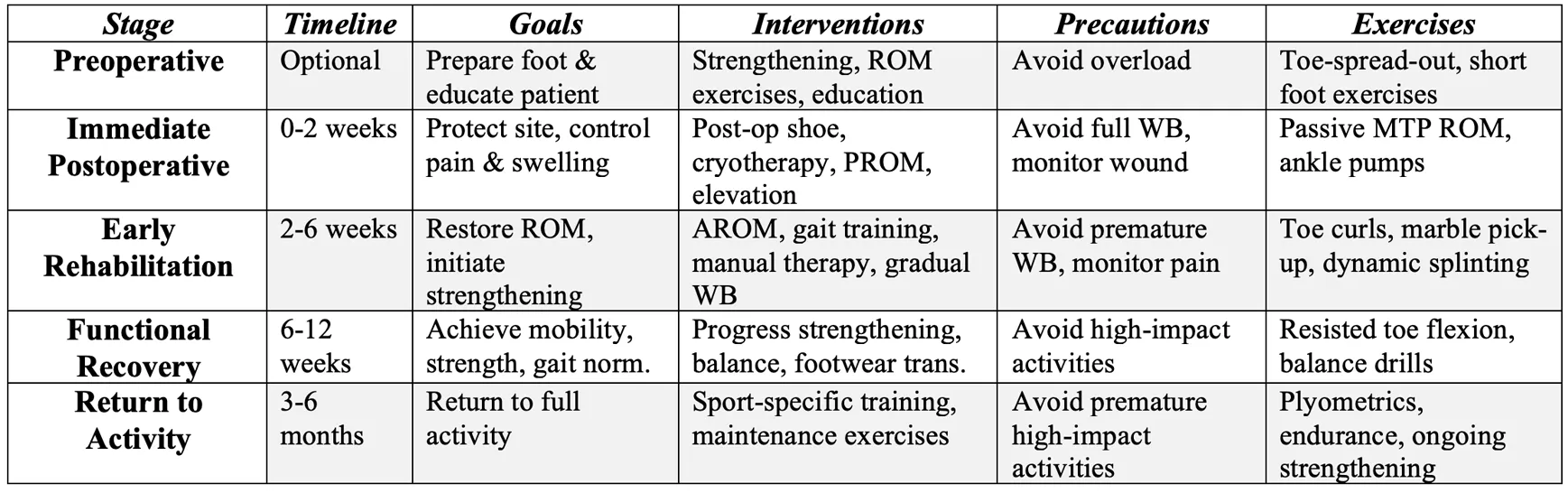
Summary Table of Rehabilitation Protocol
Important New Findings and Points
- Early Weight-Bearing: Recent randomized controlled trials support early weight-bearing (as early as 2 weeks) post HV surgery without increasing complications, showing improved early function and patient satisfaction.
- Virtual Reality-Guided Exercise: Innovative VR-guided seated exercises improve toe function, plantar sensation, and trunk-pelvic postural control, showing promise as adjunct rehabilitation tools.
- Footwear Compliance: Use of reverse camber shoes off-loads the forefoot but may reduce compliance in older patients or those with arthritis due to altered gait patterns and discomfort.
- Physical Therapy Importance: Postoperative physical therapy including manual therapy, gait training, and strengthening is vital to restore weight-bearing and function of the first ray, which surgical correction alone cannot fully achieve.
- Patient Education and Motivation: Rehabilitation nursing based on the Information-Motivation-Behavioral Skills (IMB) model improves adherence, self-efficacy, and outcomes in postoperative HV patients.
Frequently Asked Questions
Early weight-bearing is often safe from 2 weeks post-surgery, but full walking with normal footwear usually occurs by 8-12 weeks, depending on your surgeon’s protocol.
Yes, rehabilitation including exercises, manual therapy, and gait training helps restore joint motion, strength, and walking patterns, improving your recovery and reducing complications.
Initially, a postoperative shoe with a flat, stiff sole or a reverse camber shoe is recommended to protect the surgical site. Later, comfortable shoes with good support and possibly custom orthoses are advised.
Yes, home exercises for toe mobility, foot strengthening, and balance are important parts of rehabilitation. Your therapist will guide you on appropriate exercises.
Some discomfort is normal, but if pain or swelling worsens, inform your therapist or surgeon. Rehabilitation programs are adjusted to your tolerance to ensure safe recovery.
References (APA 7th Edition)
- Connor, C., & Berk, D. M. (1995). Effects of continuous passive motion following Austin bunionectomy: A prospective review. Journal of the American Podiatric Medical Association, 85(12), 744–748. https://doi.org/10.7547/87507315-85-12-744
- Dearden, P. M. C., Robinson, P. W., Varrall, C. R., Goff, T. J., Fogarty, K. A., & Wines, A. P. (2019). Clinical and radiological outcomes of forefoot offloading versus rigid flat shoes in patients undergoing surgery of the first ray. Foot & Ankle International, 40(10), 1189–1194. https://doi.org/10.1177/1071100719858621
- John, M. M., Kalish, S., Perns, S. V., & Willis, F. B. (2011). Dynamic splinting for postoperative hallux limitus: A randomized, controlled trial. Journal of the American Podiatric Medical Association, 101(4), 285–288. https://doi.org/10.7547/1010285
- Ling, S. K. K., Wu, Y.-M., Li, C., Lui, T. H., & Yung, P. S.-H. (2020). Randomised control trial on the optimal duration of non-weight-bearing walking after hallux valgus surgery. Journal of Orthopaedic Translation, 23, 61–66. https://doi.org/10.1016/j.jot.2020.04.009
- Nakamoto, M., Kakuda, A., Miyashita, T., Kitagawa, T., Kitano, M., Hara, M., & Kudo, S. (2021). Seated virtual reality-guided exercise improved gait in a postoperative hallux valgus case. International Journal of Environmental Research and Public Health, 18(24), 13267. https://doi.org/10.3390/ijerph182413267
- Schuh, R., Hofstaetter, S. G., Adams Jr., S. B., Pichler, F., Kristen, K. H., & Trnka, H.-J. (2009). Rehabilitation after hallux valgus surgery: Importance of physical therapy to restore weight bearing of the first ray during the stance phase. Physical Therapy, 89(9), 934–945. https://doi.org/10.2522/ptj.20080375
- Prissel, M. A., Hyer, C. F., Grambart, S. T., Bussewitz, B. W., Brigido, S. A., DiDomenico, L. A., et al. (2016). A multicenter, retrospective study of early weightbearing for modified Lapidus arthrodesis. The Journal of Foot & Ankle Surgery, 55(2), 226–229. https://doi.org/10.1016/j.jfas.2015.09.003
- Pustovoit, B., Pustovoit, K., Staude, V., & Tokhtamyshev, M. (2024). Physical therapy is an integral part of the surgical treatment of valgus deformity of the first toe. Orthopaedics, Traumatology and Prosthetics, 1, 43–51. https://doi.org/10.15674/0030-59872024143-48
- Sarmah, S. S., Hossain, F. S., & Mishra, V. (2012). Effectiveness of the reverse camber shoe in postoperative hallux valgus surgery. Foot & Ankle Specialist, 5(4), 245–249. https://doi.org/10.1177/1938640012451314
- Tarantino, D., Palermi, S., Sirico, F., & Corrado, B. (2021). Hallux valgus deformity: Treatment options, postoperative management, and return to sport. Journal of Human Sport and Exercise, 16(4proc), S1674–S1687. https://doi.org/10.14198/jhse.2021.16.Proc4.14
- Yu, S., Yang, Y., Su, H., Zhou, L., & Zhou, J. (2025). Influence of early rehabilitation nursing on postoperative rehabilitation of patients with hallux valgus based on information-motivation-behavior skills model. Pakistan Journal of Medical Sciences, 41(1), 235–241. https://doi.org/10.12669/pjms.41.1.9791