
Comprehensive ACL Reconstruction Rehabilitation Protocol
Introduction
The anterior cruciate ligament (ACL) is a critical stabilizer of the knee, primarily responsible for preventing anterior translation and rotational instability of the tibia relative to the femur. Injuries to the ACL are common, especially among athletes involved in cutting, jumping, and pivoting sports. While nonoperative management is an option for some patients, surgical reconstruction remains the gold standard for those aiming to return to preinjury levels of activity and prevent further joint damage.
ACLR involves replacing the torn ACL with a graft, which can be an autograft—most commonly the bone-patellar tendon-bone (BPTB) or hamstring tendon (semitendinosus and gracilis), or an allograft. The surgical goal is to restore knee stability and function by replicating the native ACL’s anatomic and biomechanical properties.
The procedure begins with a diagnostic arthroscopy to assess the entire knee joint, including menisci, cartilage surfaces, and other ligamentous structures, ensuring that all associated injuries are identified and addressed. The torn ACL remnants are debrided, and the bone tunnels are prepared in the femur and tibia at precise anatomic locations to accommodate the graft.
The BPTB graft is harvested through a longitudinal medial parapatellar incision, where the central third of the patellar tendon along with bone plugs from the patella and tibial tubercle are obtained. The graft is then prepared and inserted through the tibial and femoral tunnels, secured typically with interference screws, ensuring appropriate tension and isometry. The hamstring autograft involves harvesting the semitendinosus and gracilis tendons, which are quadrupled to enhance strength, and similarly secured in the prepared bone tunnels.
Meticulous surgical technique, including careful handling of soft tissues and precise placement of tunnels and fixation devices, is essential to optimize graft integration and function. The procedure is performed under general or regional anesthesia with a tourniquet applied for a bloodless field.
Postoperative rehabilitation is an integral component of the treatment, designed to protect the healing graft while restoring range of motion, strength, neuromuscular control, and ultimately enabling a safe return to preinjury activities.
Preoperative Management (Prehabilitation)
Goals:
- Reduce swelling and inflammation
- Achieve full knee extension (0°)
- Improve quadriceps and hamstring strength (deficit <20%)
- Normalize gait and function
- Patient education to improve self-efficacy
Interventions:
- Quadriceps and hamstring strengthening (closed and open kinetic chain exercises)
- ROM exercises emphasizing full extension
- Gait training with assistive devices as needed
- Patient education about postoperative expectations and early exercises
Postoperative Rehabilitation Phases
Rehabilitation is divided into three main goal-based phases with approximate timeframes, but progression is based on functional criteria rather than strict timelines.
Phase 1: Protection and Early Recovery (0-4 weeks)
Goals:
- Protect healing graft and surgical site
- Control pain and edema
- Achieve full passive knee extension (0°) and 90-120° flexion by week 4
- Initiate quadriceps activation
- Normalize gait with brace and crutches (if prescribed)
Range of Motion (ROM) Guidelines:
- Extension: Full passive extension (0°) is critical and should be achieved within first week to prevent arthrofibrosis
- Flexion: Gradual progression to 90-120° by end of phase, depending on graft and concomitant injury
- BPTB graft: No specific flexion restrictions unless meniscal repair present
- HS graft: Similar ROM progression, but caution with early flexion if meniscal repair present
Exercise Types:
- Quadriceps activation: Isometric quadriceps sets starting immediately post-op; focus on reactivation without pain
- Hamstring and calf isometrics: Submaximal to avoid graft stress
- Knee range of motion: Passive and active-assisted exercises such as heel slides, prone hangs
- Closed kinetic chain (CKC) exercises: Initiate early weight bearing as tolerated with brace locked in extension
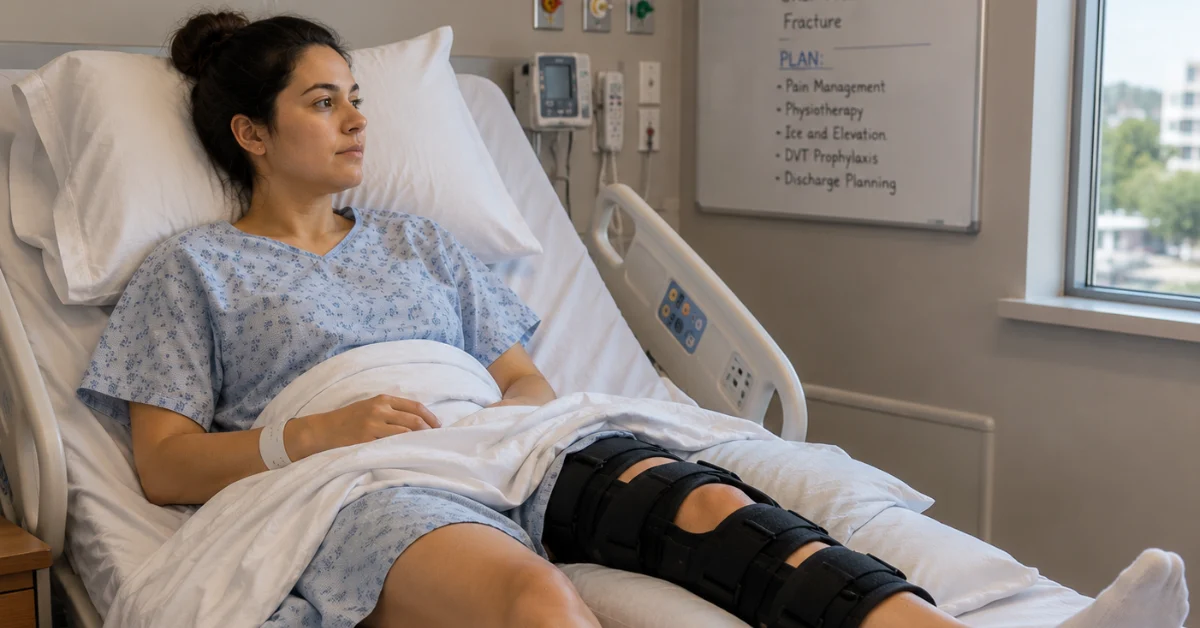
- Brace: Postoperative bracing does not confer additional benefit and is not routinely recommended
Additional:
- Cryotherapy and compression to manage swelling
- Neuromuscular electrical stimulation (NMES) may be used adjunctively to improve quadriceps activation, especially in cases of poor muscle recruitment
Phase 2: Strengthening and Neuromuscular Control (4-12/16 weeks)
Goals:
- Restore full pain-free ROM (0° extension to full flexion)
- Improve quadriceps and hamstring strength
- Enhance neuromuscular control and balance
- Normalize gait without assistive devices
ROM Guidelines:
- Progress to full active knee flexion and extension by 8-12 weeks
- HS graft: Open kinetic chain (OKC) exercises started cautiously at 4 weeks in limited ROM (90° to 45°), no added resistance before 12 weeks to prevent graft elongation
- BPTB graft: OKC exercises with resistance can begin at 4 weeks in ROM 90° to 45°
Exercise Types:
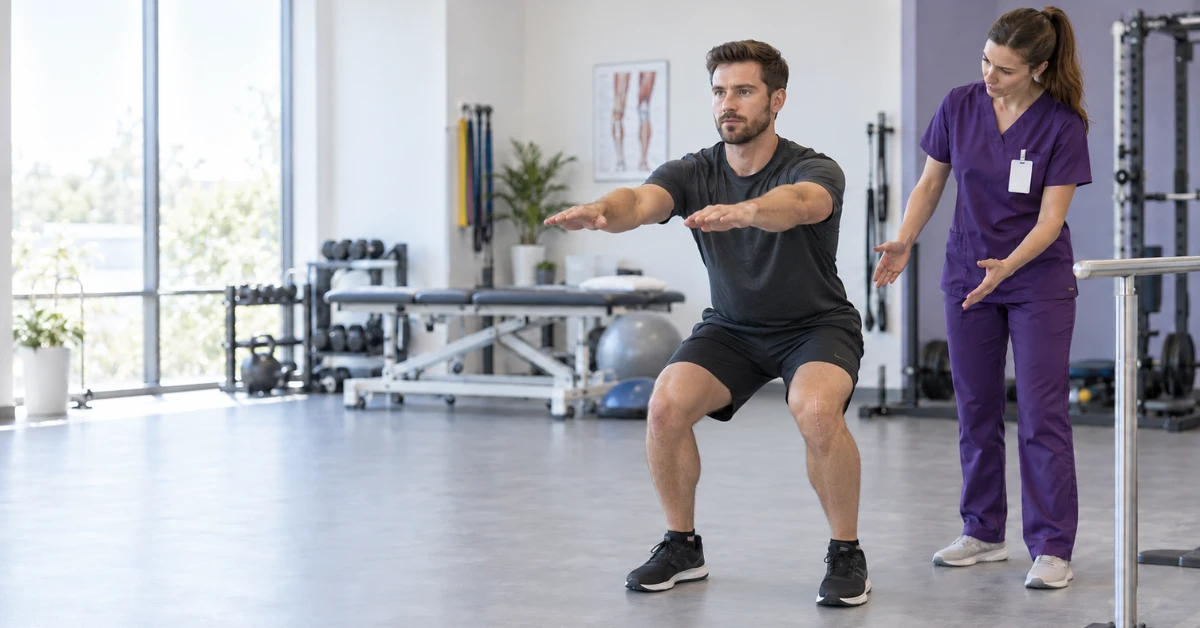
- CKC exercises: Step-ups, mini-squats, leg presses in 0°-60° flexion range
- OKC exercises: Short arc quadriceps strengthening
- Neuromuscular training: Balance exercises on stable and unstable surfaces, proprioception, perturbation training
- Aquatic therapy: Safe and effective adjunct early in rehabilitation to decrease joint stress and improve proprioception
- NMES: High-intensity NMES early post-op can improve quadriceps strength but is not mandatory
- Home-based rehabilitation: Minimally supervised programs are safe and effective for motivated patients
Phase 3: Advanced Strengthening and Return to Activity (12 weeks – 6 months)
Goals:
- Achieve >90% strength of uninvolved limb (quadriceps and hamstrings)
- Improve functional performance (e.g., hop tests, agility drills)
- Restore dynamic joint stability and neuromuscular control
- Prepare for return to running and sport-specific activities
Exercise Types:
- Strength training: Progressive resistance exercises (PREs) both concentric and eccentric
- Plyometrics: Introduced around 4-5 months; include multi-planar jumping and landing drills focusing on proper alignment
- Agility and sport-specific drills: Gradual progression considering functional criteria
- Running progression: Start with interval jogging; progress cautiously based on criteria
- Functional testing: Use hop tests, strength measures, and movement quality assessments to guide progression
Phase 4: Return to Sport (6-12 months)
Criteria for Return:
- Full, pain-free ROM
- Strength and functional test performance within 90-100% of uninvolved leg (hop tests, isokinetics)
- No episodes of giving way or instability
- Psychological readiness (fear of reinjury addressed)
- Proper movement quality during dynamic tasks (e.g., drop jump, cutting)
Exercise Types:
- Sport-specific training with high intensity and speed
- Continued plyometric and agility drills
- Maintenance strength and neuromuscular training
- Gradual unrestricted participation following clearance
crutches and bracing
The common question about crutches and bracing: For how long should I wear knee brace, and for how long should I walk with crutches?
- Patients typically use crutches with weight-bearing as tolerated for about 4 weeks postoperatively. After this period, patients may begin weaning from two crutches to one crutch, and then eventually discontinue crutches as they achieve a normal, pain-free gait pattern.
- The brace (if used) is typically worn locked in extension during the first week, unlocked for exercises after that, and discontinued once the patient has approximately 100° of knee flexion, can perform a straight leg raise (SLR) without lag, and demonstrates a normal gait pattern. This process usually coincides with the crutch weaning around 4 to 6 weeks after surgery.
- Some sources emphasize that the use and discontinuation of crutches should always be done in consultation with the surgeon and based on the patient’s individual progress, pain levels, strength, and functional ability.
- Use of crutches: typically 4 weeks post-operation (weight-bearing as tolerated).
- Weaning from crutches: after 4 weeks, progressing to one crutch and then none as gait normalizes.
- Discontinuation criteria: full extension, SLR without lag, ~100° flexion, and normal gait.
- Individual variation based on patient status and surgeon’s guidance.
- Thus, while there is no absolute fixed timeline, the general guideline is about 4 weeks of crutch use post-ACL reconstruction, with a gradual progression to full weight-bearing and independent walking thereafter.
Graft-Specific Considerations
Bone-Patellar Tendon-Bone (BPTB) Graft:
- OKC exercises with resistance allowed from 4 weeks post-op in restricted ROM of 90° to 45°
- Emphasis on patellofemoral pain management due to increased incidence
- Early weight bearing in brace locked in extension recommended
Hamstring (HS) Graft:
- Delay adding resistance to OKC exercises until 12 weeks to avoid graft elongation
- Similar ROM goals but with cautious progression of flexion if meniscal repair present
- Early neuromuscular training important to restore hamstring strength and dynamic stability
Evidence-Based Recommendations for ACLR Rehabilitation:
1. Rehabilitation Phases and Timeline
- Rehabilitation after ACLR should be goal-based rather than strictly time-based.
- The process typically includes four to five phases spanning from immediate postoperative care to return to sport, covering about 6 to 12 months depending on individual progress.
- Progression from one phase to the next should be guided by functional criteria (e.g., range of motion, strength, stability) rather than fixed timeframes.
- Early initiation of weight-bearing as tolerated (WBAT) and range of motion (ROM) exercises is beneficial and decreases patellofemoral pain.
- Continuous passive motion (CPM) devices do not improve long-term outcomes and are not routinely recommended.
2. Open Kinetic Chain (OKC) vs Closed Kinetic Chain (CKC) Exercises
- CKC exercises are typically recommended in the early phases (first 6 weeks) due to their perceived safety and decreased anterior shear on the tibia.
- OKC exercises can be safely introduced after 6 weeks, with evidence suggesting they may provide greater improvements in quadriceps strength and endurance in the later phases (8-12 weeks post-op).
- Early use of OKC exercises (before 6 weeks) lacks sufficient evidence and may pose risks to the graft.
3. Neuromuscular Electrical Stimulation (NMES)
- NMES can help in improving quadriceps strength post-ACLR, especially when applied early and at high intensity in supervised outpatient settings.
- Short-term use of NMES does not significantly improve pain or function beyond exercise alone, but long-term use appears beneficial for strength and functional outcomes.
- Novel garment-integrated NMES devices have shown greater efficacy and improved compliance compared to traditional NMES units.
4. Postoperative Bracing
- There is strong evidence that postoperative bracing does not confer additional benefits in terms of knee swelling, pain, ROM, or safety.
- Given the additional cost and lack of demonstrated advantage, routine use of rehabilitative bracing is not recommended.
5. Vibration Training
- Whole-body vibration (WBV) training integrated into rehabilitation programs can result in significant improvements in muscle strength, joint stability, and postural control compared with conventional therapies.
- WBV may be especially useful in the mid to late phases of rehabilitation.
6. Aquatic Therapy
- Aquatic therapy may provide early benefits in proprioception, quadriceps, and hamstring strength, and walking endurance.
- It is a safe adjunct to conventional rehabilitation, especially in the early postoperative period.
7. Home-Based vs Supervised Rehabilitation
- Minimally supervised or home-based rehabilitation programs can be as effective as fully supervised physical therapy in motivated patients.
- Home-based programs may result in similar or better range of motion outcomes in the short term.
8. Additional Exercise Considerations
- Incorporation of neuromuscular training throughout rehabilitation optimizes joint stability and functional outcomes.
- Proprioception exercises improve functional status and knee joint control.
- Functional movement training (e.g., Functional Movement Screen-based exercises) has been demonstrated to improve knee function and movement quality.
- Relaxation and guided imagery techniques may reduce reinjury anxiety and pain, while improving strength.
New Perspectives from the Literature:
- Neuroplasticity after ACLR: Whole Body Vibration (WBV) training is beneficial likely due to neuroplastic changes following injury and reconstruction, compensating for the loss of mechanoreceptors in the native ACL
- Accelerated Rehabilitation: Accelerated protocols (as short as 6 weeks) can improve short-term outcomes and quality of life (e.g., depression scores) without adverse effects on graft stability, but long-term benefits remain unclear
- Garment-Integrated NMES: This novel form of NMES improves compliance and yields better functional outcomes compared to conventional NMES
- No Added Benefit of Bracing: Despite common clinical use, bracing post-ACLR does not improve outcomes and should be reconsidered to avoid unnecessary costs
- Open vs Closed Chain Exercises: While CKC exercises are safer early on, adding OKC exercises after 6 weeks can enhance strength and function without increasing laxity, suggesting a combined approach may be optimal
- Mental Health Component: Psychological interventions such as relaxation and guided imagery can positively affect pain, anxiety, and strength, highlighting the importance of mind-body approaches in ACL rehabilitation
- Home-Based Rehabilitation: Home programs may be equally effective as supervised therapy, supporting more accessible and cost-effective care models
Frequently Asked Questions
1. How long will I need crutches after ACL surgery?
The length of time you need crutches depends on your surgery, your surgeon’s instructions, and how well you are progressing through rehabilitation.
Many patients gradually reduce their use of crutches as they regain knee control, strength, and the ability to walk without a significant limp. Your physiotherapist will help determine when it is safe to progress to walking without crutches.
2. When can I walk normally after ACL reconstruction?
Walking normally is an important early goal of ACL rehabilitation. Initially, swelling, pain, reduced muscle strength, and limited knee movement can affect your walking pattern.
Your physiotherapist will work with you to restore knee movement, quadriceps strength, balance, and walking mechanics. You should gradually return to normal walking as your strength and control improve rather than trying to rush the process.
3. When can I drive after ACL surgery?
You should return to driving only when you can safely control the vehicle and perform an emergency braking manoeuvre without significant pain or hesitation.
The timing depends on which knee was operated on, whether you drive an automatic or manual vehicle, your strength and movement, and your overall recovery. Always follow your surgeon’s recommendations and check with your insurance provider if required.
4. When can I return to work after ACL reconstruction?
Your return-to-work timeline depends largely on your occupation.
Someone with a desk-based job may be able to return relatively early, while jobs involving prolonged standing, walking, climbing, lifting, kneeling, or physically demanding activities may require a longer recovery period.
A gradual return to work may be appropriate, with temporary modifications to your duties when necessary. Your physiotherapist can help develop a return-to-work plan based on your functional abilities and job demands.
5. When can I go up and down stairs normally after ACL surgery?
Stairs can be challenging during the early stages of ACL rehabilitation because they require adequate knee strength, balance, and control.
Initially, you may need to use a railing or a modified stair pattern. As your strength and confidence improve, your physiotherapist will work with you to restore a normal alternating stair pattern.
The goal is not simply to get up and down the stairs, but to do so with good control and without compensating through the other leg.
6. When can I start going to the gym after ACL surgery?
You can usually begin exercising relatively early in your rehabilitation, but the type and intensity of exercise will change as you progress.
Early rehabilitation may focus on restoring knee movement, reducing swelling, activating the quadriceps, and improving basic strength. As your recovery progresses, exercises become more challenging and may include progressive resistance training, single-leg exercises, balance work, and eventually jumping and running.
Your physiotherapist will help determine which exercises are appropriate for your current stage of recovery.
7. When can I start running after ACL reconstruction?
Running should not be started simply because a certain number of weeks or months have passed.
Before beginning a running program, you should demonstrate adequate knee movement, strength, single-leg control, and the ability to perform functional exercises without significant pain or swelling.
Your physiotherapist can assess your readiness and develop a gradual return-to-running program.
8. When can I return to sports after ACL surgery?
Returning to sport is a gradual process and should be based on your recovery rather than time alone.
Before returning to sports that involve cutting, pivoting, jumping, or rapid changes in direction, you should demonstrate appropriate strength, balance, movement control, functional performance, and confidence in the operated knee.
Return-to-sport testing may include strength assessments, hop tests, movement-quality assessments, and sport-specific exercises.
Your physiotherapist will help you progress from basic movement and strengthening to running, jumping, agility, and eventually sport-specific training.
9. How long does ACL rehabilitation take?
ACL rehabilitation is a long-term process, and recovery varies from person to person.
Although rehabilitation is often discussed in terms of months, the timeline alone does not determine whether you are ready to progress. Your knee function, strength, movement quality, swelling, stability, and ability to perform progressively more demanding activities are important factors.
Returning to high-level sports can take many months, and rushing the process may increase the risk of problems or reinjury.
10. When can I start jumping and doing agility exercises after ACL surgery?
Jumping and agility exercises are introduced progressively once you have developed sufficient strength, knee control, and tolerance to loading.
Rehabilitation typically progresses from controlled strengthening and balance exercises to more demanding single-leg activities, jumping, landing, running, and changes of direction.
These exercises should be progressed according to your individual performance and response rather than introduced solely based on a specific date after surgery.
11. Will my knee ever feel normal after ACL reconstruction?
Many people are able to return to an active lifestyle after ACL reconstruction. However, recovery is different for every individual.
It is normal for the knee to feel different during various stages of rehabilitation. Strength deficits, stiffness, swelling, reduced confidence, and sensitivity around the surgical area can persist for a period of time.
Consistent rehabilitation and a gradual return to activity can help restore strength, function, and confidence in your knee.
12. What happens if I return to sports too soon after ACL surgery?
Returning to sport before your knee is adequately prepared can increase the risk of poor performance, symptoms, and reinjury.
Being cleared to return to sport should involve more than simply reaching a certain number of months after surgery. Your physiotherapist may assess strength, hop performance, balance, movement quality, agility, and sport-specific abilities before recommending a return to full activity.
A gradual progression from rehabilitation exercises to sport-specific training allows your body and confidence to adapt to increasingly demanding movements.
References:
- Wright, Rick W., et al. Anterior cruciate ligament reconstruction rehabilitation: MOON guidelines. Sports health 7.3 (2015): 239-243.
- Wright, Rick W., et al. A systematic review of anterior cruciate ligament reconstruction rehabilitation–part II: open versus closed kinetic chain exercises, neuromuscular electrical stimulation, accelerated rehabilitation, and miscellaneous topics. The journal of knee surgery 21.03 (2008): 225-234.
- Maxey, Lisa, and Jim Magnusson. Rehabilitation for the postsurgical orthopedic patient. Elsevier Health Sciences, 2013.
- Nelson, C., Rajan, L., Day, J., Hinton, R., & Bodendorfer, B. M. (2021). Postoperative Rehabilitation of Anterior Cruciate Ligament Reconstruction: A Systematic Review. Sports Medicine and Arthroscopy Review, 29(2), 63–80.
- van Melick, N., van Cingel, R. E. H., Brooijmans, F., et al. (2016). Evidence-based clinical practice update: Practice guidelines for anterior cruciate ligament rehabilitation based on a systematic review and multidisciplinary consensus. British Journal of Sports Medicine, 50(24), 1506–1515.
- Wright, R. W., Preston, E., Fleming, B. C., et al. (2008). A systematic review of anterior cruciate ligament reconstruction rehabilitation. Part II: Open versus closed kinetic chain exercises, neuromuscular electrical stimulation, accelerated rehabilitation, and miscellaneous topics. The Journal of Knee Surgery, 21(3), 225–234.
- Lisa Maxey, M. S., PT, & Jim Magnusson, MS, ATC, PT. (2013). Rehabilitation for the Postsurgical Orthopedic Patient (3rd ed.). Mosby.