Ready, Set, Go!
How We Know When You Can Safely Return to Sports After ACL Surgery
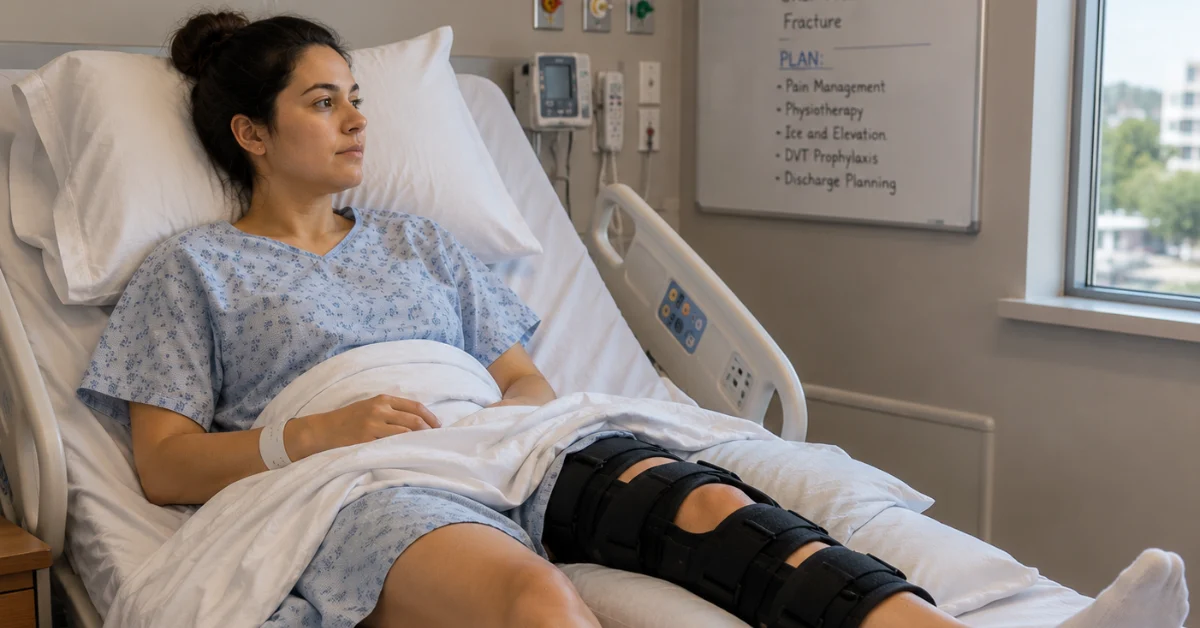
Why Timing Matters
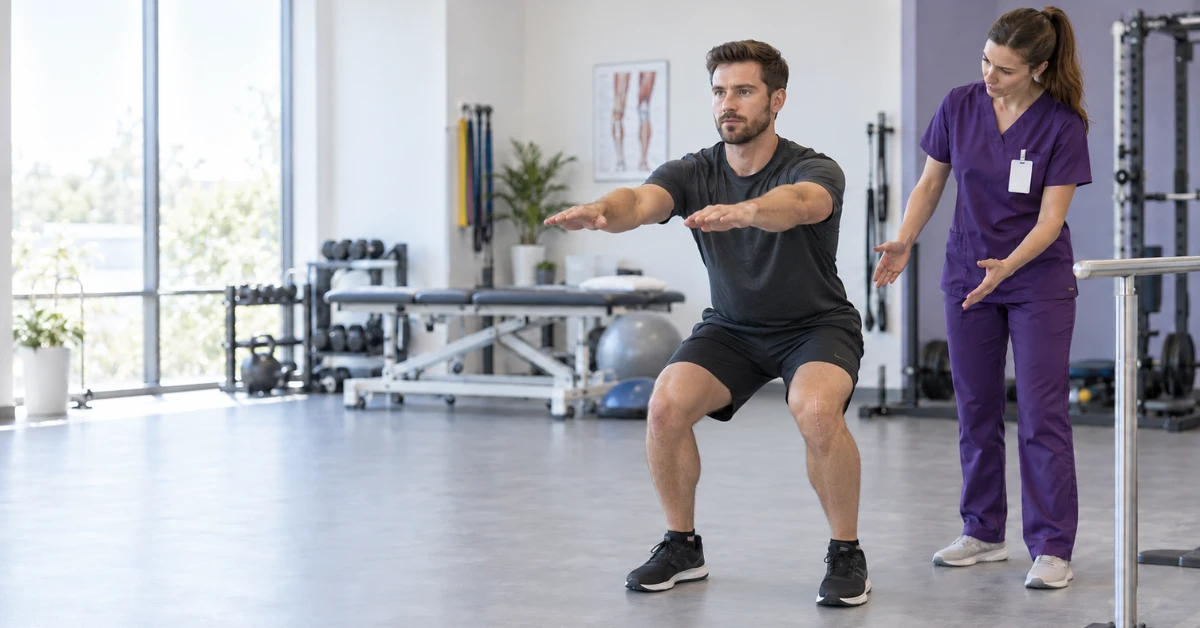
Introducing Functional Test Batteries: Your Knee’s Check-Up
What the Tests Tell Us
Research shows that only about 15-17% of patients pass these comprehensive tests around 6 to 8 months after surgery, meaning most still have deficits that could put them at risk if they return to intense sports too soon. Another test battery combining strength, hop tests, and movement analysis found that less than 10% of patients met the strict return-to-sport criteria at 6 months. Psychological readiness, like confidence and fear of re-injury, is also an important part of the assessment.
The Importance of a Multifaceted Approach
What This Means for You
- Don’t rush your return! Even if you feel ready, passing objective tests is crucial to reduce re-injury risk.
- Functional tests help your surgeon and therapist understand exactly where you stand and what areas need more work.
- Psychological factors matter; feeling confident and ready goes hand in hand with physical healing.
- A well-rounded rehabilitation program that includes strength, balance, and movement quality training is essential.
Take-Home Message
Returning to sports after ACL reconstruction is an exciting goal, but safety comes first. Using validated, easy-to-perform test batteries, your healthcare team can guide you on when your knee is strong, stable, and ready — physically and mentally — to get back in the game. This approach helps keep you injury-free and enjoying the sports you love for years to come!
| Test Component | Purpose/What it Assesses | Description / How to Perform |
|---|---|---|
| One-Legged Stability Test (OL-ST) | Neuromuscular control and balance | Patient stands on the injured leg maintaining balance; performance assessed by measuring sway or stability time. |
| Two-Legged Stability Test (TL-ST) | Overall balance and postural control | Patient stands on both legs on a stable or unstable surface, measuring postural sway or stability. |
| Counter Movement Jump (CMJ) | Explosive leg power and jump height | Patient performs a vertical jump starting with a downward movement (counter movement) and then jumps upward; height and power are measured. Can be done one-legged (OL-CMJ) or two-legged (TL-CMJ). |
| Speedy Jumps (OL-SY) | Agility, coordination, and neuromuscular control | Patient performs a series of rapid hops or jumps on one leg over a set distance or time. |
| Plyometric Jumps (TL-PJ) | Power and reactive strength | Patient performs repeated two-legged explosive jumps focusing on quick ground contact and height. |
| Quick Feed Test (TL-QFT) | Speed and coordination | Patient performs quick foot movements (e.g., tapping or stepping) to test reaction speed and coordination. |
| Single-Leg Hop for Distance (SLH) | Functional performance, limb symmetry | Patient hops forward on one leg as far as possible, maintaining balance on landing. |
| Triple-Leg Hop for Distance (TLH) | Endurance and power | Patient performs three consecutive hops on the same leg, covering maximum distance. |
| Side Hop Test (SH) | Lateral agility and power | Patient hops laterally side-to-side over a set distance or obstacles on one leg. |
| Jump-Landing Task assessed with LESS | Movement quality, landing mechanics, injury risk | Patient jumps from a 30-cm box to a target line, lands with both feet simultaneously, and immediately performs a vertical jump; errors in landing mechanics are scored. |
| Isokinetic Strength Test | Quadriceps and hamstring strength | Patient performs knee flexion and extension at various speeds on an isokinetic dynamometer to measure muscle strength. |
| Patient-Reported Outcome Measures (IKDC, ACL-RSI) | Subjective knee function, psychological readiness | Patient completes questionnaires assessing knee symptoms, function, and confidence/fear related to return to sport. |
Notes on performance:
- For stability tests, lower sway or better balance indicates better neuromuscular control.
- Limb Symmetry Index (LSI) is calculated for one-legged tests: injured leg performance divided by non-injured leg performance, multiplied by 100%. Thresholds such as >90% for dominant leg and >80% for non-dominant leg are used to indicate readiness.
- LESS (Landing Error Scoring System) scores less than 5 indicate good landing mechanics.
- Isokinetic strength thresholds include quadriceps strength >3.0 Nm/kg normalized to body weight and hamstring/quadriceps (H/Q) ratios >55% for females and >62.5% for males.
- Psychological readiness is assessed via questionnaires like ACL-RSI, with scores >56 suggesting readiness.
This test battery can typically be completed in about 45-60 minutes, requires minimal equipment (e.g., a box for jump-landing, measurement tape, video cameras for LESS, hop test space, and an isokinetic dynamometer or hand-held dynamometer), and provides an objective and comprehensive evaluation of physical and psychological readiness to return to sport after ACL reconstruction.
References:
- Herbst, E., Hoser, C., Hildebrandt, C., Raschner, C., Hepperger, C., Pointner, H., & Fink, C. (2015). Functional assessments for decision-making regarding return to sports following ACL reconstruction. Part II: Clinical application of a new test battery. Knee Surgery, Sports Traumatology, Arthroscopy, 23(5), 1283–1291.
- Gokeler, A., Welling, W., Zaffagnini, S., Seil, R., & Padua, D. (2017). Development of a test battery to enhance safe return to sports after anterior cruciate ligament reconstruction. Knee Surgery, Sports Traumatology, Arthroscopy, 25(2), 192–199.
- Roe, C., Jacobs, C., Hoch, J., Johnson, D. L., & Noehren, B. (2022). Test batteries after primary anterior cruciate ligament reconstruction: A systematic review. Sports Health, 14(2), 205–215.