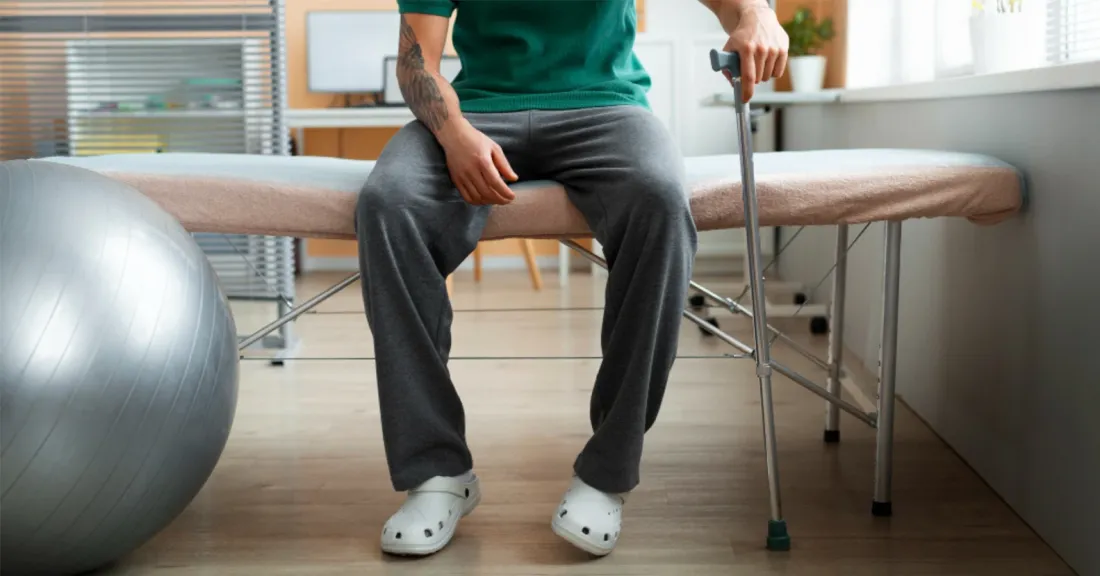
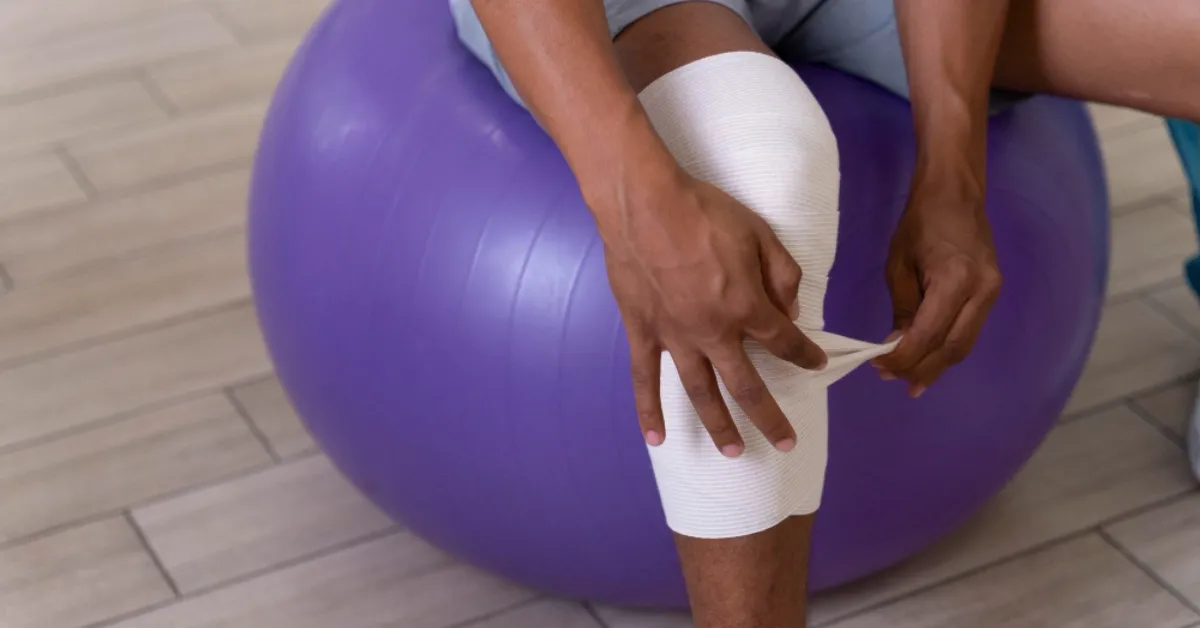
Patient with knee injury sitting on a rehabilitation treatment table using a cane, preparing for knee rehabilitation and recovery.

Total knee replacement (TKR) is one of the most common surgeries used to reduce pain and improve mobility in people with severe knee arthritis. While much attention is often placed on rehabilitation after surgery, growing evidence shows that what patients do before surgery can be just as important. Preoperative rehabilitation—often called prehabilitation—is designed to prepare the body and mind for surgery, leading to better recovery afterward.

Building Strength Before Surgery Improves Recovery

Research shows that people who enter surgery stronger and more physically active tend to recover more quickly. A large review and analysis found that patients who completed prehabilitation programs before knee replacement had better muscle strength, walking ability, and overall physical function before surgery. These improvements are important because strength and function before surgery are strong predictors of how well someone will recover afterward.

In particular, prehabilitation was shown to improve knee muscle strength and walking endurance. These benefits carried over into the early recovery period after surgery, with patients showing better function as early as six weeks after their knee replacement. This suggests that prehabilitation can help patients regain movement and independence sooner.

More Than Exercise Alone

Most prehabilitation programs focus on exercise, especially strengthening, balance training, and functional movements such as standing up from a chair or climbing stairs. However, newer research suggests that adding lifestyle-based strategies may further improve outcomes.

Programs that combine exercise with education, stress management, and healthy lifestyle advice—such as sleep and activity pacing—have shown promising results. Some patients experienced reduced pain after surgery, improved physical function, and shorter hospital stays. Although research in this area is still limited, these findings suggest that addressing both physical and lifestyle factors may better prepare patients for surgery and recovery.

The Importance of Consistency and Support

One challenge with prehabilitation is staying consistent. People waiting for knee replacement often experience pain and stiffness, which can make exercise difficult. Studies show that supervised programs, guided by a healthcare professional, lead to better participation and results than unsupervised home programs.

New approaches such as virtual or online rehabilitation programs may also help patients stay engaged by reducing barriers such as travel time and access to care. Most research supports a minimum of four to six weeks of prehabilitation, with at least two sessions per week, to achieve meaningful improvements in strength and function.

What This Means for Patients

Prehabilitation does not replace surgery, but it helps patients enter surgery in the best possible condition. Patients who participate in prehabilitation often feel more confident, better prepared, and more informed about their recovery.

Although long-term outcomes such as pain relief continue to be studied, current evidence supports prehabilitation as a safe and effective way to improve early recovery after total knee replacement.


Reference:

  1. Punnoose, A., Claydon-Mueller, L. S., Weiss, O., Zhang, J., Rushton, A., & Khanduja, V. (2023).
    Prehabilitation for patients undergoing orthopedic surgery: A systematic review and meta-analysis.
    JAMA Network Open, 6(4), e238050. https://doi.org/10.1001/jamanetworkopen.2023.8050
  2. Kan, A., Page, K., Devine, N., Rabajoli, A., & Sattler, L. (2024).
    Preoperative lifestyle modifications combined with a structured exercise protocol on patient outcomes following total knee replacement surgery: A systematic review.
    Musculoskeletal Care. https://doi.org/10.1002/msc.1899