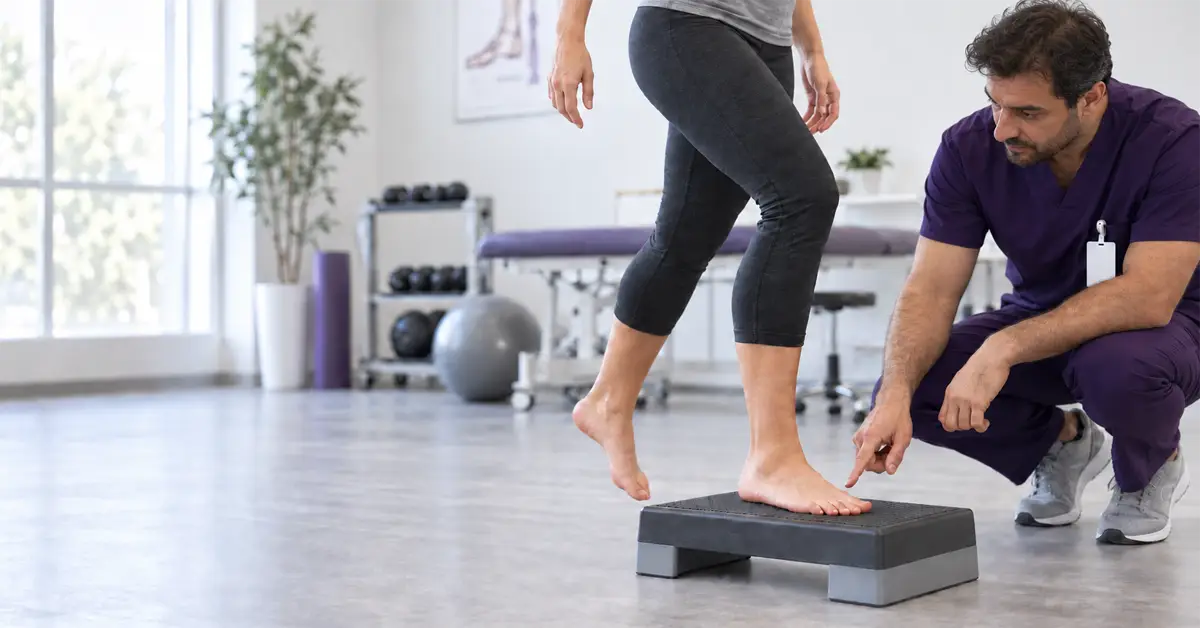
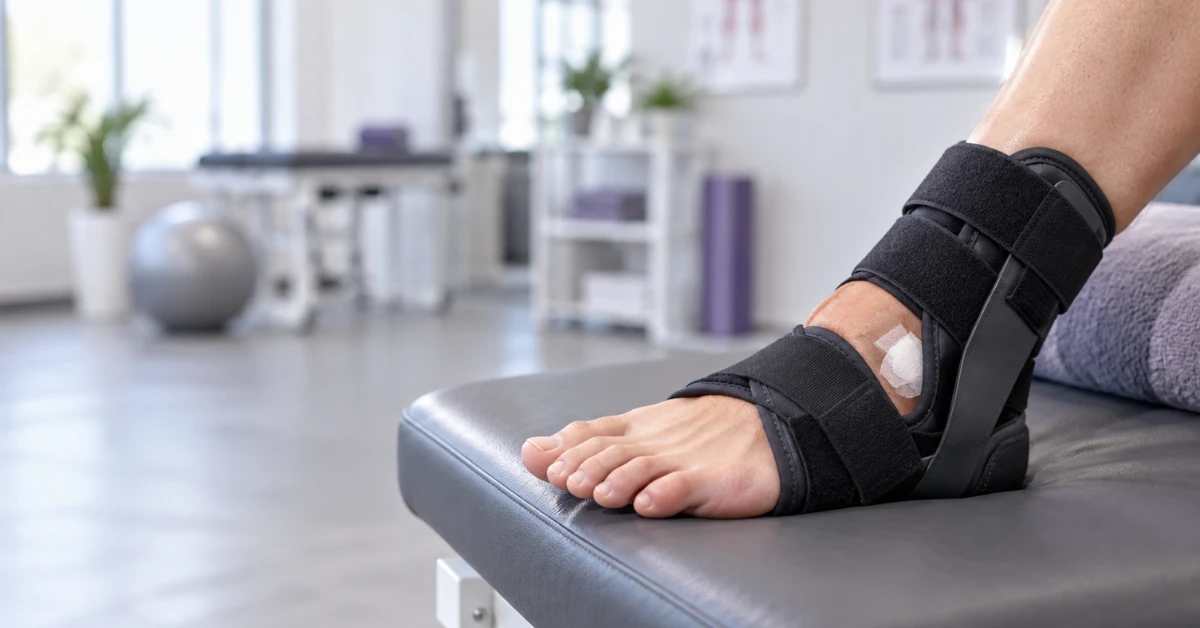
Achilles tendon rupture (ATR) is a common musculoskeletal injury that often affects physically active individuals, particularly males involved in sports that require sudden acceleration or jumping. The incidence of ATR has been rising globally, attributed partly to increased participation in high-demand sports and the aging population. Traditionally, treatment options for ATR include operative (surgical) repair and non-operative (conservative) management. Deciding between these methods has been a subject of significant debate due to differences in outcomes, risks, and recovery profiles.
This article aims to summarize and discuss the current understanding of operative versus non-operative treatment for acute Achilles tendon rupture, drawing on findings from four recent and influential studies. We will explore the risks associated with each method, criteria for patient selection, functional outcomes, rehabilitation considerations, and interesting new insights relevant to both patients and physiotherapists.
Operative vs Non-operative Treatment: Key Comparisons
1. Risk of Re-rupture and Complications
It is widely recognized that non-operative treatment carries a higher risk of tendon re-rupture compared to surgical repair. Meta-analyses have shown re-rupture rates of approximately 11% for non-operative patients versus around 4% for those treated surgically, highlighting a significant difference in tendon integrity post-treatment. However, when early functional rehabilitation protocols incorporating early range of motion exercises are applied, the re-rupture rates between operative and non-operative groups become statistically equivalent. This finding suggests that rehabilitation plays a critical role in tendon healing irrespective of treatment modality.
On the other hand, operative treatment is associated with a higher incidence of other complications such as infections (both deep and superficial), adhesions, and sural nerve injuries. For instance, surgical repair patients experience infection rates significantly higher than those undergoing conservative treatment, with nerve injury rates also notably elevated in minimally invasive procedures compared to open repair and non-operative management. Therefore, while surgery may reduce re-rupture risk, it introduces a higher risk of surgical complications.
2. Functional Outcomes and Return to Activity
Functionally, patients who undergo surgical repair generally demonstrate better performance in jump tests and muscular endurance evaluations at 12 months post-treatment compared to non-operative patients. Despite these differences in muscle function and endurance, both groups have similar rates of returning to previous levels of sporting activity, indicating that ultimate activity resumption is comparable.
Moreover, a large-scale randomized controlled trial incorporating objective dynamometer measurements found no significant differences in plantar flexion strength or patient-reported outcomes between open repair, minimally invasive surgery, and non-operative treatment at 24 months. This points towards the potential equivalence of long-term functional recovery across treatment modalities when appropriate rehabilitation is followed.
3. Criteria for Selecting Treatment Methods
Surgical treatment is often recommended for younger, active patients, particularly athletes, who demand a reliable and strong tendon repair to minimize downtime and reduce re-rupture risk. Conversely, non-operative management is generally preferred for elderly patients or those with comorbidities that increase surgical risk, such as diabetes or vascular disease.
However, the decision is increasingly influenced by the availability and adherence to early functional rehabilitation protocols. Non-operative treatment paired with early weight-bearing and range of motion exercises can yield outcomes comparable to surgery, challenging the traditional dichotomy. Additionally, the type of surgical repair, open versus minimally invasive, may influence complication rates and cosmetic outcomes, with percutaneous techniques showing lower wound complications but higher sural nerve injury risk.
4. Novel Insights: Subacute Re-rupture Management
An interesting and emerging area is the management of subacute Achilles tendon re-rupture, defined as re-rupture occurring 5-12 weeks after primary repair. Recent findings indicate that conservative treatment for subacute re-ruptures can achieve comparable clinical outcomes to primary repair without re-rupture, with patients showing similar muscle strength and functional scores at 12 months. This challenges the conventional notion that re-operation is mandatory for re-rupture and suggests that natural healing, supported by immobilization and bracing, may suffice in many cases.
5. Imaging and Objective Measures
Practical Implications for Patients and Physiotherapists
- Early Functional Rehabilitation is Key: Both operative and non-operative treatments benefit significantly from rehabilitation protocols emphasizing early range of motion and weight-bearing. This approach reduces re-rupture risk and aids in return to activity. Review our other articles to learn more about Achilles tendon rupture rehabilitation, including the post-operative protocol and the non-operative management protocol.
- Individualized Treatment Decisions: Age, activity level, comorbidities, and access to rehabilitation resources should guide treatment choices. Surgery may be preferred for younger, athletic individuals, while conservative management with vigilant rehab may suit others.
- Awareness of Complications: Patients opting for surgery should be informed about elevated risks of infection and nerve injury. Non-operative patients should understand the slightly higher risk of re-rupture but fewer complications overall.
- Management of Re-ruptures: Conservative treatment can be effective for subacute re-ruptures, avoiding the need for immediate re-operation in many cases.
Conclusion
The management of acute Achilles tendon rupture is evolving, with increasing evidence supporting equivalence in long-term outcomes between operative and non-operative treatments when combined with early functional rehabilitation. While surgery reduces the risk of re-rupture, it carries a higher complication rate. Non-operative treatment avoids surgical risks but requires strict adherence to rehabilitation protocols to optimize outcomes. Moreover, conservative management of subacute re-rupture is a promising approach that warrants consideration. Ultimately, treatment should be individualized, balancing risks, benefits, and patient preferences, with physiotherapists playing a crucial role in recovery through guided rehabilitation.
Reference:
- Zhou, K., Song, L., Zhang, P., Wang, C., & Wang, W. (2018). Surgical versus non-surgical methods for acute Achilles tendon rupture: A meta-analysis of randomized controlled trials. The Journal of Foot & Ankle Surgery, 57(6), 1191-1199. https://doi.org/10.1053/j.jfas.2018.05.007
- Fischer, S., Colcuc, C., Gramlich, Y., Stein, T., Abdulazim, A., von Welck, S., & Hoffmann, R. (2021). Prospective randomized clinical trial of open operative, minimally invasive and conservative treatments of acute Achilles tendon tear. Archives of Orthopaedic and Trauma Surgery, 141(5), 751-760. https://doi.org/10.1007/s00402-020-03461-z
- Choi, J. Y., Choo, S. K., Kim, B. H., & Suh, J. S. (2023). Conservative treatment outcome for Achilles tendon re-rupture occurring in the subacute phase after primary repair. Archives of Orthopaedic and Trauma Surgery, 144(4), 1055–1063. https://doi.org/10.1007/s00402-023-05161-w
- Myhrvold, S. B., Brouwer, E. F., Andresen, T. K. M., Rydevik, K., Amundsen, M., Grün, W., Butt, F., Valberg, M., Ulstein, S., & Hoelsbrekken, S. E. (2022). Nonoperative or surgical treatment of acute Achilles’ tendon rupture. The New England Journal of Medicine, 386(15), 1409-1420. https://doi.org/10.1056/NEJMoa2108447