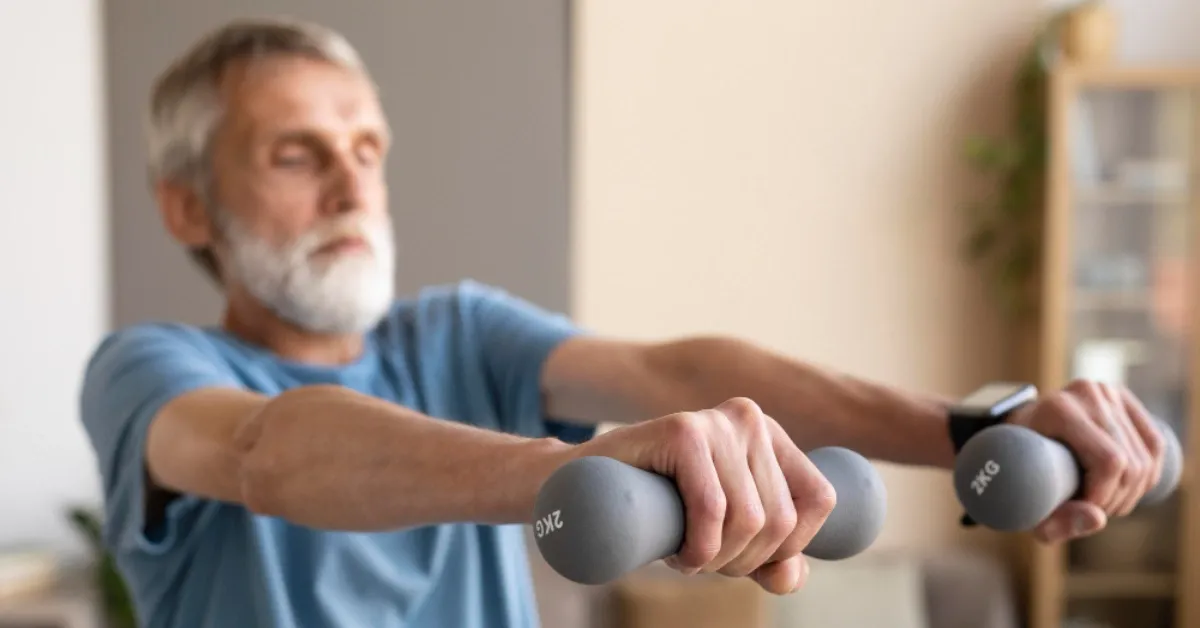
Senior man performing overhead lunge stretch in forest to improve mobility and return to sport after shoulder arthroplasty.

Introduction

Shoulder arthroplasty is increasingly performed not only to relieve pain but also to restore function and allow patients to return to an active lifestyle. As these procedures are now offered to younger and more active individuals, one of the most common questions patients ask is: “Can I return to sport after shoulder replacement?”
Current evidence suggests that, for most patients, the answer is yes—although the rate of return, level of play, and timeline depend on the type of shoulder arthroplasty, the sport involved, and the individual’s rehabilitation.


Types of Shoulder Arthroplasty and Why They Matter

There are three main types of shoulder arthroplasty:

  • Anatomic total shoulder arthroplasty (aTSA)
  • Reverse total shoulder arthroplasty (rTSA)
  • Hemiarthroplasty (HHA)

Each procedure has different biomechanical implications, which influence post-operative function and return-to-sport expectations. Historically, surgeons were more cautious with procedures involving a glenoid component, but newer evidence has challenged this conservative approach.


Rate of Return to Sport

A large systematic review and meta-analysis examining return to sport after shoulder arthroplasty found that approximately 85% of patients returned to at least one sport following surgery. Importantly, about 72% returned at the same or a higher level of play compared to their preoperative status.

Return-to-sport rates varied by procedure:

  • Anatomic TSA: ~93% return to sport
  • Reverse TSA: ~75% return to sport
  • Hemiarthroplasty: ~71% return to sport

Anatomic total shoulder arthroplasty demonstrated the highest likelihood of returning to sport, likely due to better restoration of shoulder mechanics and range of motion.


What Sports Do Patients Commonly Return To?

Patients most commonly returned to:

  • Swimming
  • Golf
  • Fitness and gym-based activities
  • Tennis
  • Cycling

Lower- to moderate-demand sports showed the highest and most consistent return rates. Interestingly, emerging evidence suggests that some patients are also able to return to higher-demand upper extremity activities, including racquet sports and resistance training, particularly following anatomic TSA—though expectations should be individualized.


Timeline for Return to Sport

Across studies, the average return to sport occurred around 5–6 months post-surgery, with a reported range of 1 to 36 months. This wide variation reflects differences in:

  • Type of surgery
  • Preoperative condition
  • Sport-specific demands
  • Rehabilitation quality and adherence

A gradual, criteria-based progression rather than a time-only approach is strongly recommended.


Pain, Function, and Patient Satisfaction

Beyond sport participation, patients experienced:

  • Significant reductions in pain
  • Marked improvements in shoulder function
  • High overall satisfaction rates (70–100%)

Notably, reported complications related directly to sport participation were rare, suggesting that appropriately guided return to activity is generally safe.


Rehabilitation Considerations for Patients and Clinicians

For physiotherapists and clinicians, key rehabilitation principles include:

  • Early restoration of mobility within surgical precautions
  • Progressive strengthening of the rotator cuff and scapular stabilizers
  • Emphasis on movement quality, endurance, and control
  • Sport-specific loading and task simulation in later phases

Exercises typically progress from range-of-motion and low-load strengthening to functional and sport-specific drills, tailored to the individual’s goals.


Practical Takeaways for Patients

  • Most patients can safely return to sport after shoulder arthroplasty
  • The type of surgery influences return-to-sport likelihood
  • Returning to the same level of play is common but not guaranteed
  • Patience, structured rehabilitation, and realistic expectations are key

Patients should have open discussions with their surgeon and physiotherapist to align goals, understand limitations, and develop a safe return-to-activity plan.


Conclusion

Returning to sport following shoulder arthroplasty is achievable for the majority of patients. Anatomic total shoulder arthroplasty offers the highest return rates, but meaningful sport participation is possible across all arthroplasty types when rehabilitation is well guided. As evidence continues to evolve, clinicians can more confidently counsel patients that shoulder replacement does not necessarily mean the end of an active lifestyle—but rather, the beginning of a well-planned return to movement.


Reference:

Liu, J. N., Steinhaus, M. E., Garcia, G. H., Chang, B., Fields, K., Dines, D. M., Warren, R. F., & Gulotta, L. V. (2018). Return to sport after shoulder arthroplasty: A systematic review and meta-analysis. Knee Surgery, Sports Traumatology, Arthroscopy, 26(1), 100–112. https://doi.org/10.1007/s00167-017-4547-1