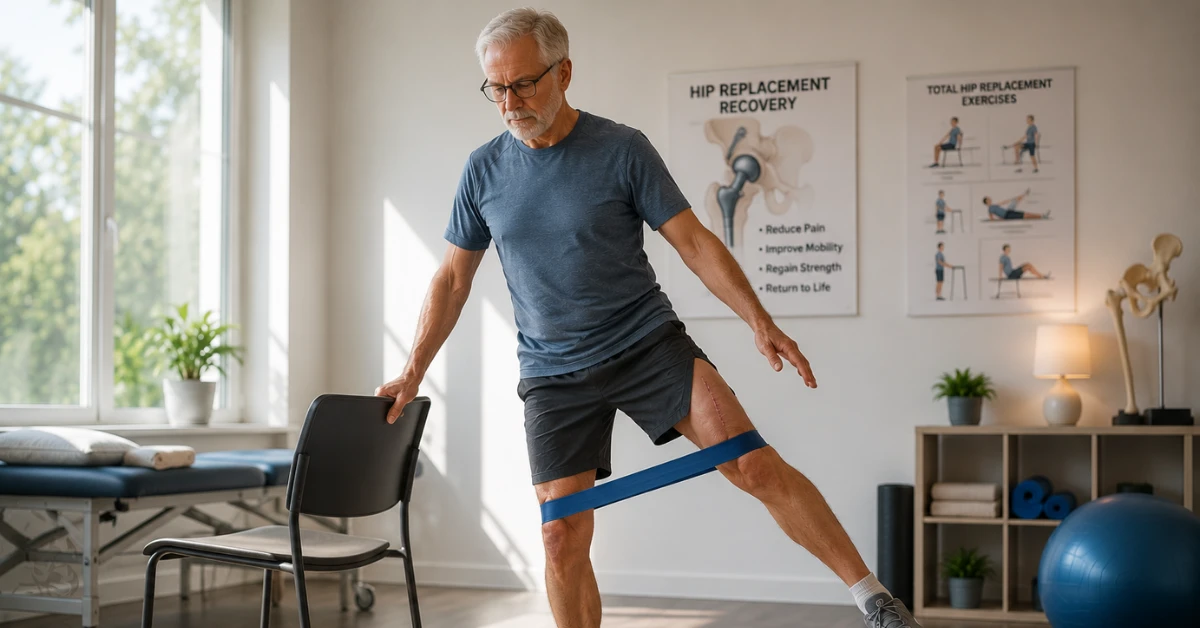
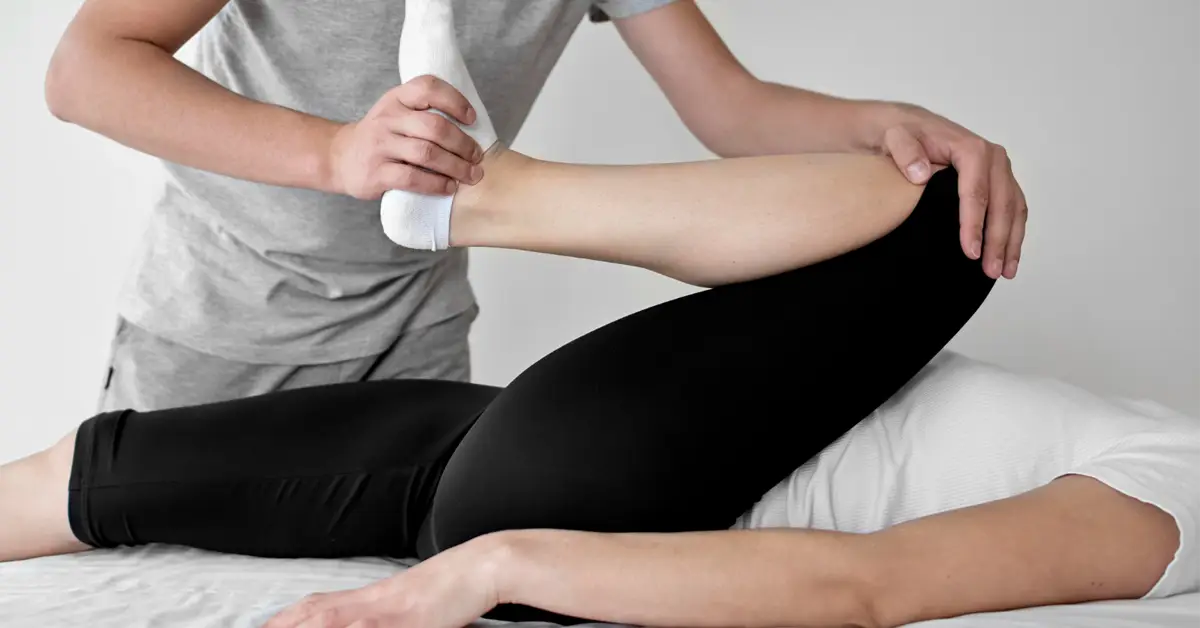
Young athlete sitting on a skateboard with a basketball, ready to return to sport after hip arthroscopy

Despite the growing prevalence of hip arthroscopy for various joint conditions (read more here), there is still a lack of standardized, evidence-based return-to-play (RTP) protocols, functional testing guidelines, and rehabilitation frameworks—particularly for patients with athletic or high-level training backgrounds. The purpose of this article is to briefly review and discuss this important topic.

Timing of Return to Sport (RTS)

  • General Time Frames:
    Aggregate recommendations from high-volume hip arthroscopy centers suggest that athletes can typically return to competitive sport between 12 to 20 weeks (3 to 5 months) post-surgery, with 70% of surveyed surgeons supporting this timeframe
  • Measured RTP Duration:
    Systematic reviews indicate that the mean actual RTP duration observed clinically is approximately 7 months, which is longer than the recommended 3 to 4 months in many studies. This discrepancy might be due to heterogeneous patient populations, varying surgical procedures, and different athletic levels (professional vs. recreational)
  • Return to Running:
    Return to running is a critical milestone, often initiated around 12 to 16 weeks, sometimes earlier on an anti-gravity treadmill. A structured phased return-to-run program is advised, progressing from walking to jogging and then distance running, with careful monitoring of symptoms

Preparation and Rehabilitation Phases

A four-phase rehabilitation protocol is widely used, providing a progressive and structured approach from immediate postoperative care to sport-specific activities. This phased approach is consistent across multiple articles, although details and timing can vary. To check the comprehensive rehabilitation protocol, please read our Hip Arthroplasty rehab Protocol.


Conditional Criteria and Functional Assessment

  • There is no universally validated functional test currently accepted to assess readiness for RTP after hip arthroscopy. 
  • Conditional criteria often include the ability to perform sport-specific motions without pain, including running, jumping, lateral agility drills, and single-leg squats. 
  • Strength benchmarks such as hip abduction/adduction strength ≥90-95% of the contralateral limb are suggested as part of the assessment. 
  • Functional tests like the Y-balance, the Vail Hip Sports Test, Tuck-Jump Test, and modified hop tests (adapted from ACL rehabilitation) have been used but lack universal consensus.
  • Patient-reported outcome measures, such as the modified Harris Hip Score (mHHS) and Non-arthritic Hip Score (NAHS), show significant postoperative improvement and may correlate with RTP success.
  • Objective tools like video gait analysis, wearable motion sensors, and anti-gravity treadmills provide valuable feedback on biomechanics and recovery progress.

Rehabilitation Considerations and Pitfalls

  • Capsular Management:
    Routine capsular closure during hip arthroscopy is increasingly emphasized to maintain hip stability and optimize outcomes.
    Rehabilitation protocols are adapted to protect the capsule initially, limiting hip extension and flexion to avoid stress on the repair.
    Joint mobilizations (Grades I-III) are introduced cautiously post-capsular closure to prevent stiffness while avoiding excessive capsular laxity (Grades IV-V contraindicated). 
  • Soft Tissue Management:
    Soft tissue mobilization targeting the iliopsoas, tensor fascia lata, quadratus lumborum, and hip adductors is important to prevent adhesions and tendonitis. 
  • Gait Retraining:
    Early normalization of gait patterns is critical to avoid compensatory movements that may cause hip flexor tendonitis and lower back pain. 
  • Progression Based on Function, Not Time Alone:
    Advancement through rehabilitation phases should be based on mastery of functional milestones, pain control, strength, and gait quality rather than rigid timelines. 
  • Use of Technology:
    Anti-gravity treadmills and wearable sensors assist in safe progression of running and provide objective data to guide rehabilitation

Outcomes

  • The overall RTP rate after hip arthroscopy is high, around 84.6%, with professional athletes generally showing higher and faster RTP rates than recreational athletes. 
  • Patient-reported outcome measures such as mHHS and NAHS improve significantly postoperatively (mHHS improves by ~33%, NAHS by ~41%), correlating with functional recovery.
  • Lower preoperative function (mHHS) predicts greater postoperative improvement. 
  • Despite high number of patients aiming return to play, variability in rehabilitation protocols and lack of standardized RTP assessments remain a challenge.

Summary Recommendations

  • Return to sport is generally recommended between 12 to 20 weeks postoperatively, but actual RTP may extend up to 7 months depending on patient factors. 
  • Rehabilitation should follow a four-phase progression emphasizing joint protection, gradual weightbearing, strength and function restoration, and finally sport-specific training with functional testing. 
  • Pain-free performance of sport-specific movements and demonstration of adequate strength and neuromuscular control are critical criteria before RTP. 
  • Functional testing and objective biomechanical assessments should be incorporated, when possible, to guide safe RTP decisions. 
  • Rehabilitation protocols must be individualized considering surgical details (e.g., capsular closure), patient goals, and sport demands.


Reference:

  1. O’Connor, M., Minkara, A. A., Westermann, R. W., Rosneck, J., & Lynch, T. S. (2018). Return to play after hip arthroscopy: A systematic review and meta-analysis. The American Journal of Sports Medicine, 46(11), 2780-2788. https://doi.org/10.1177/0363546518759731
  2. Domb, B. G., Stake, C. E., Finch, N. A., & Cramer, T. L. (2014). Return to sport after hip arthroscopy: Aggregate recommendations from high-volume hip arthroscopy centers. Orthopedics, 37(10), e902-e905. https://doi.org/10.3928/01477447-20140924-57
  3. Holling, M. J., Miller, S. T., & Geeslin, A. G. (2022). Rehabilitation and return to sport after arthroscopic treatment of femoroacetabular impingement: A review of the recent literature and discussion of advanced rehabilitation techniques for athletes. Arthroscopy, Sports Medicine, and Rehabilitation, 4(1), e125-e132. https://doi.org/10.1016/j.asmr.2021.11.003
  4. Kuhns, B. D., Weber, A. E., Batko, B., Nho, S. J., & Stegemann, C. (2017). A four-phase physical therapy regimen for returning athletes to sport following hip arthroscopy for femoroacetabular impingement with routine capsular closure. International Journal of Sports Physical Therapy, 12(4), 683-696.
  5. Domb, B. G., Sgroi, T. A., & VanDevender, J. C. (2016). Physical therapy protocol after hip arthroscopy: Clinical guidelines supported by 2-year outcomes. Sports Health, 8(4), 347-354.